P5 — Stress, defence and biotechnology
Week 10 — How plants survive stress and attack, and how we change them
Animal and Plant Physiology
About this lecture
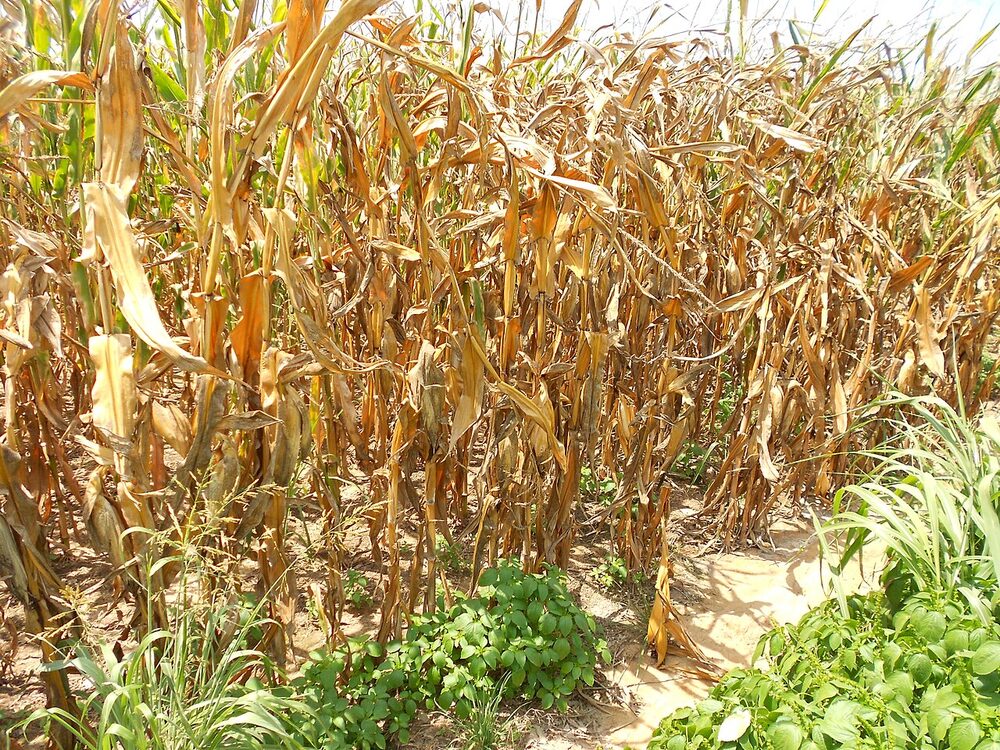
A maize field in a dry summer: the soil dries out, the irrigation water is slightly salty, the afternoons reach 38 °C, a fungus spreads on the leaves and corn borer caterpillars tunnel into the stems. The plant cannot move away from any of it. How does a plant survive stress and attack, and how can we use that knowledge to build a better crop? In P4 we saw signals regulate development. Today the same signalling, ABA, jasmonic acid and salicylic acid among them, is used to cope with a hostile environment.
Abiotic stress: drought, salinity, heat and freezing, and how cells are protected.Biotic stress: constitutive and induced defence, the hypersensitive response, SAR, the SA and JA pathways, and defensive chemicals.From mechanism to crop: Arabidopsis, Agrobacterium , tissue culture, promoters and reporters.GM crops: Bt maize, herbicide tolerance, Golden Rice, CRISPR, and how to separate evidence from values.
The running example is a maize field, and the lecture follows it in three steps: what the environment does to the plant, what attackers do to it, and how a gene can be put into the plant to help. The final slides return to the field with Bt maize. This is the last lecture of the course, so the summary also draws the plant half together and points to the animal half.
What stress does to a plant
Stress: a condition that pushes a plant’s function outside its normal range.
Drought Low soil ψ: less uptake, loss of turgor
Salinity Osmotic effect plus Na⁺ and Cl⁻ toxicity
Heat Proteins denature; membranes too fluid
Freezing Ice between cells draws water out
Stress can reduce survival , growth or seed yield : different outcomes.
The commonest stress in our field is drought. What does the plant do first?
Exercise 1.1. Note that drought and salinity share the osmotic problem from P2: water flows to lower water potential, and a salty or dry soil has a low one. Freezing is effectively a drought inside the tissue, because extracellular ice has a lower water potential than the cell sap. Transition: the first response to drought is fast, hormonal and happens in the guard cells.
Drought: ABA closes the stomata
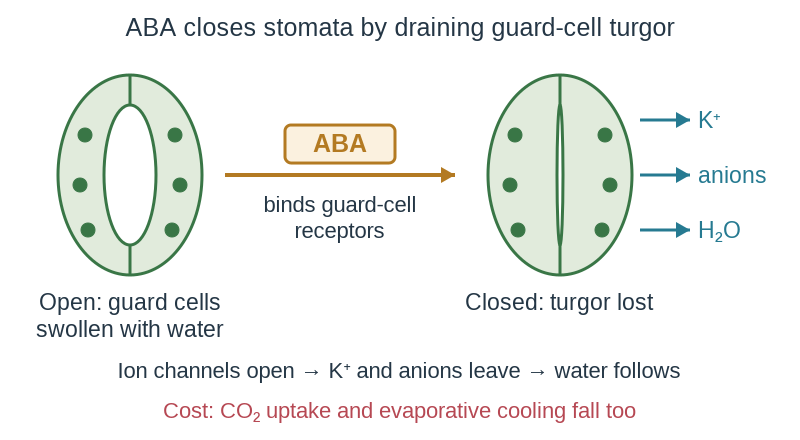
Soil dries; ABA is made in roots and leaves.
ABA binds receptors in the guard cells .
Ion channels open: K⁺ and anions leave.
Water follows, turgor falls, the stoma closes .
Within minutes, transpiration falls.
Cost: less CO₂ uptake , and less evaporative cooling, so the leaf warms.
How large is that cost? Try it.
Exercises 1.2 and 1.3. This is the fast branch of the signal chain from P4: no new genes are needed for the guard cells to close, just ion channels. The trade-off links P2 (transpiration) and P3 (CO₂ uptake): a plant under drought must choose between water and carbon. The heat cost matters on a hot afternoon in our maize field. Transition: the slower, longer-term response is to change the water potential inside the cells.
Try it: water saved versus carbon lost
Start at “well watered” and read out water loss, CO₂ uptake and leaf temperature. Then click “mild drought”: water loss roughly halves but CO₂ uptake falls by only about a fifth, so CO₂ gained per water lost rises. Ask why: CO₂ uptake is limited by both the stomata and the chloroplast, so partial closure costs less carbon than water. Then click “severe drought”: CO₂ uptake collapses and the leaf ends up about 8 °C warmer than the air. Finally raise the air-dryness slider at fixed ABA to show that dry air raises water loss without changing the stomata. This connects P2 (transpiration), P3 (CO₂ uptake) and the heat stress on the previous slide.
Osmotic adjustment and salt
Compatible solutes (proline, glycine betaine, sucrose, mannitol) lower ψs without inhibiting enzymes, so water still flows into the root.
Salinity harms a plant twice:
Osmotic: salty soil water has a low ψ, so uptake is hard, as in drought.Ionic: Na⁺ that does get in is toxic to enzymes in the cytoplasm.
How does a cell keep Na⁺ out of its cytoplasm?
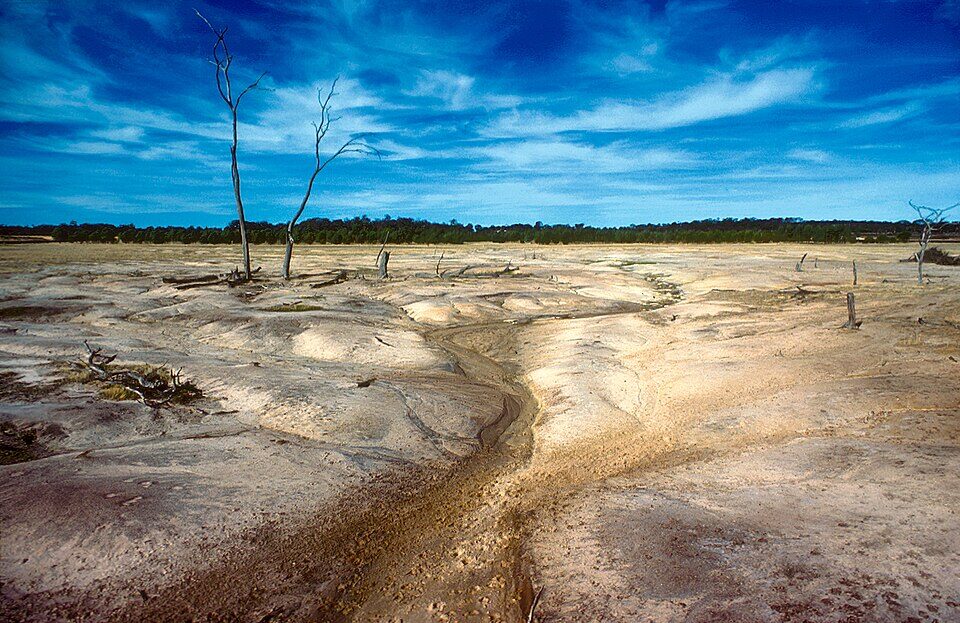
Exercise 1.4. Recall from P2 that water potential = solute potential + pressure potential: accumulating solutes makes the cell’s water potential more negative than the soil’s, so uptake continues. “Compatible” means the solute can reach high concentrations without disrupting protein function, unlike Na⁺. The photo shows the extreme case: land in the Western Australian wheat belt (1981) where clearing of deep-rooted native vegetation let saline groundwater rise; salt has crusted the surface and killed the trees, and no crop can establish. Salt tolerance therefore has two parts: the osmotic part, shared with drought, and the ion part, on the next slide.
Salt: keeping Na⁺ out of the cytoplasm
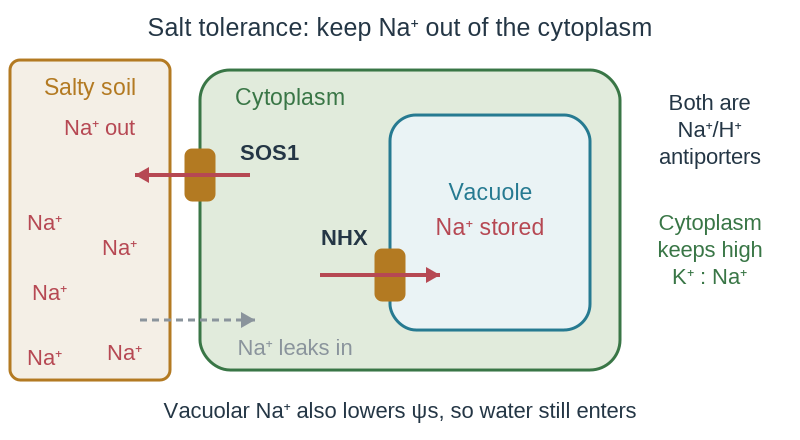
SOS1 pumps Na⁺ back out of root cells.NHX stores Na⁺ in the vacuole , where it helps lower ψs .The cytoplasm keeps a high K⁺ : Na⁺ ratio.
Exercise 1.4. The ion part of salt tolerance is solved by exclusion and vacuolar storage: SOS1 is a Na⁺/H⁺ antiporter in the plasma membrane and NHX one in the tonoplast, both driven by the proton gradients from P2. Na⁺ stored in the vacuole is not wasted: it lowers the vacuole’s ψs and so contributes to osmotic adjustment. Transition: whatever the stress, proteins and membranes need protection.
Protecting the cell, and acclimating
Heat shock proteins (chaperones)Refold or stabilise damaged proteins
Dehydrins / LEA proteins Protect proteins and membranes during dehydration
Antioxidant enzymes (superoxide dismutase, catalase)Remove reactive oxygen species
Reactive oxygen species (ROS) such as H₂O₂ damage lipids, proteins and DNA. But ROS are also signals : in stomatal closure, stress signalling and defence.Acclimation: an individual becomes more tolerant over days. Example: plants gain freezing tolerance after two weeks at 4 °C (cold acclimation).Adaptation: a population differs heritably. Example: a coastal population is more salt-tolerant than an inland one when both are grown in the same conditions .
So far the threats were physical. What if the threat is alive?
Exercises 1.5 to 1.7. LEA stands for late embryogenesis abundant: the same proteins protect the dry seed from P4. The dual role of ROS is important: a plant does not simply minimise them, it uses them as a signal, and we meet them again in the hypersensitive response. The acclimation versus adaptation distinction repeats the time scales from A1; the “same conditions” clause is what separates heritable differences from acclimation. Transition: the fungus and the caterpillar in our field.
Defence: always on, or switched on?
Physical
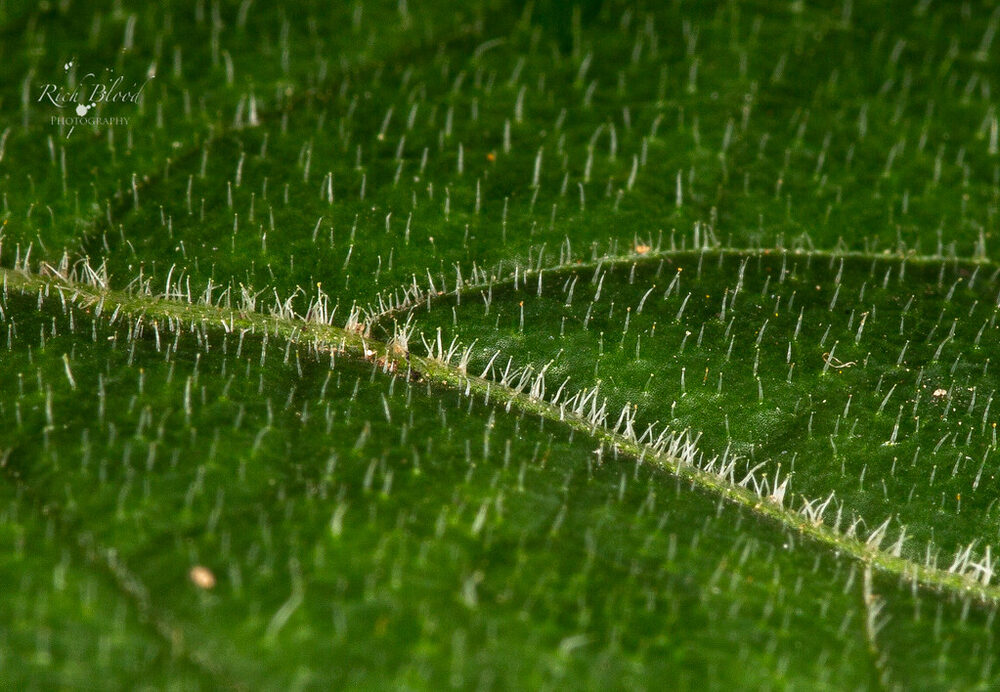
Cuticle, walls, thorns, trichomes
Callose plugs
Chemical
Stored metabolites
Phytoalexins , proteinase inhibitors
Cellular
—
Hypersensitive response
Three kinds of attacker: biotrophs feed on living cells (rusts, mildews); necrotrophs kill cells first (Botrytis ); herbivores remove tissue.
To induce a defence, the plant must first detect the attacker. How?
Exercise 2.1. Constitutive defences cost resources even when there is no attack; induced defences save that cost but take time to switch on. The attacker classes matter because a defence that works against one can help another: killing infected cells starves a biotroph but feeds a necrotroph. Proteinase inhibitors, induced by wounding in tomato, block the caterpillar’s digestive enzymes. Transition: recognition and the hypersensitive response.
Detecting the pathogen: the hypersensitive response
Receptors recognise conserved microbial molecules (e.g. bacterial flagellin); R proteins recognise specific pathogen effectors.
Recognition triggers a ROS burst and a rise in salicylic acid .
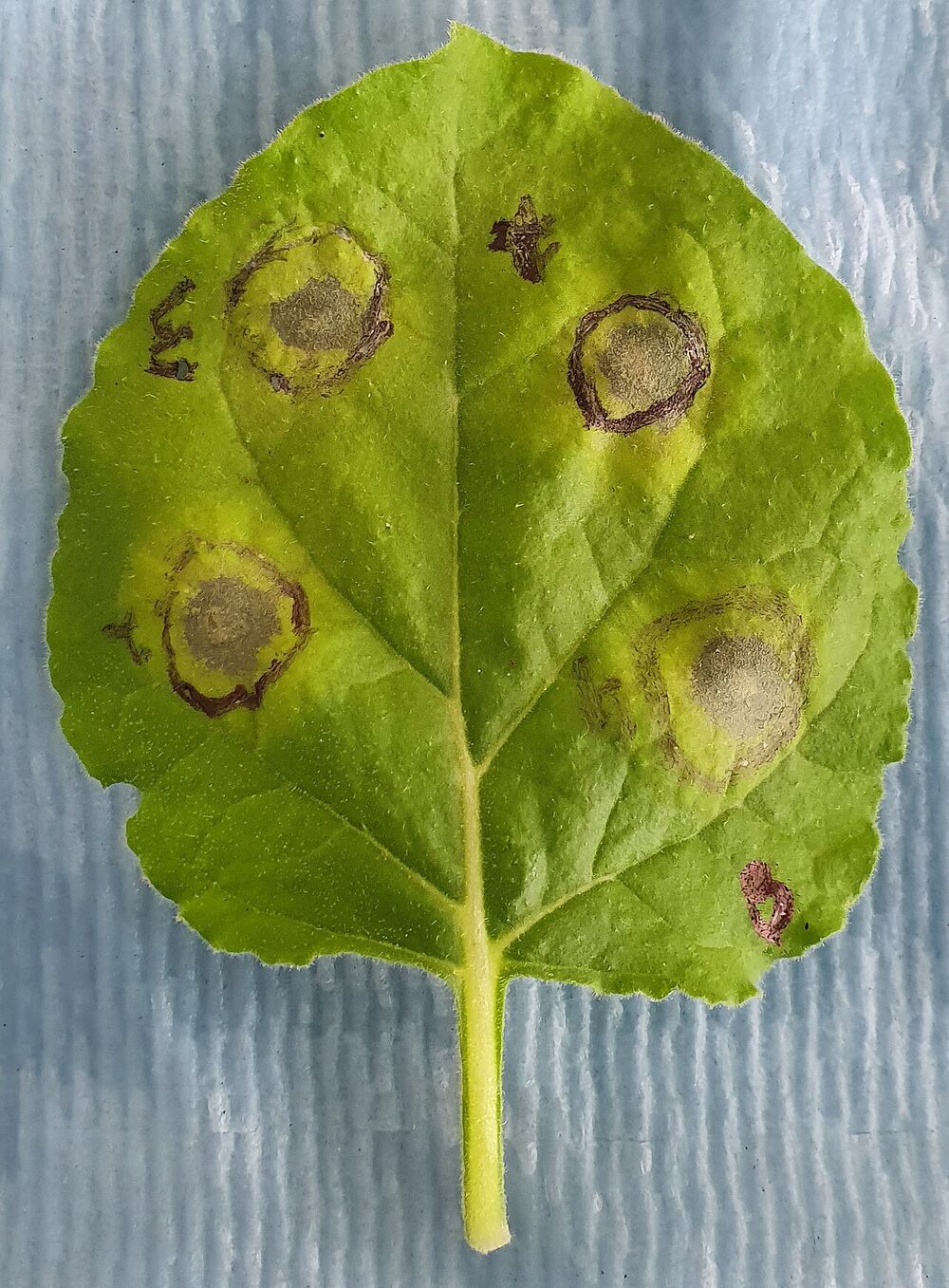
Hypersensitive response (HR): rapid death of the cells at the infection site. A biotroph needs living cells, so it is starved and cannot spread.
Does the rest of the plant benefit?
Exercise 2.3. The HR is a striking case of cells sacrificed to protect the whole, comparable to programmed cell death in development (P4 senescence). The brown spots in the photo are the dead cells; the pathogen is trapped inside them. Transition: the infection also sends a signal to the rest of the plant.
Systemic acquired resistance
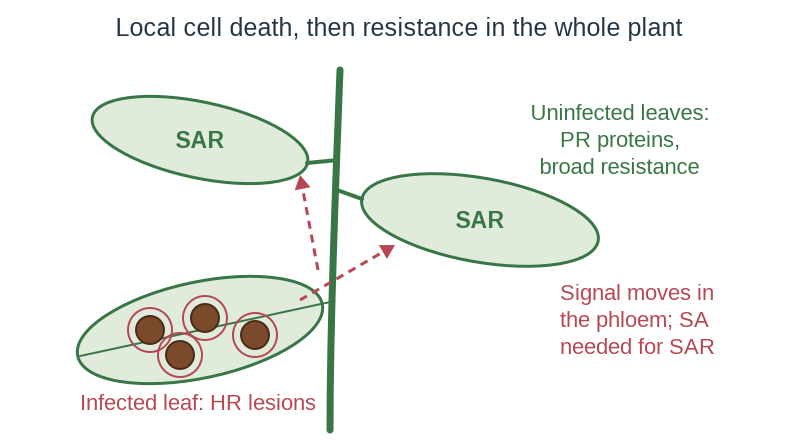
SAR: long-lasting, broad-spectrum resistance in uninfected leaves after a local infection.A signal moves through the phloem from the infected leaf.
SAR requires salicylic acid and induces pathogenesis-related (PR ) proteins.
Plants that cannot accumulate SA (expressing the bacterial enzyme NahG) develop no SAR.
Exercise 2.4. SAR is the plant’s closest analogue to immunological memory, but it is not specific to one pathogen. The NahG experiment is the classic test that SA is required. Transition: SA is one of two main defence hormones; the other is jasmonic acid.
SA versus JA: matching the defence to the attacker
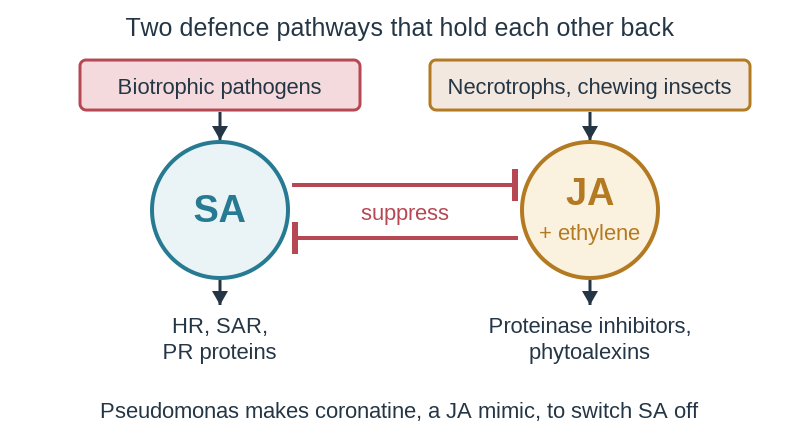
Biotrophic pathogenSA : HR, SAR, PR proteins
Necrotrophic pathogenJA + ethylene
Chewing insectJA : proteinase inhibitors
SA and JA often act antagonistically .
Tomato: wounding releases the peptide systemin → JA → proteinase inhibitors in unwounded leaves.
JAZ repressors hold JA signalling off; JA causes their degradation.
What are the chemical weapons these pathways produce?
Exercise 2.2. The logic is the HR again: cell death is useful against biotrophs but would feed a necrotroph, so the plant uses a different pathway for each. Antagonism means that some pathogens manipulate the balance; for example, Pseudomonas syringae makes coronatine, a JA mimic, to suppress SA defence. The JAZ repressors return on the growth–defence slide. Transition: the outputs of these pathways are often specialised metabolites.
The growth–defence trade-off
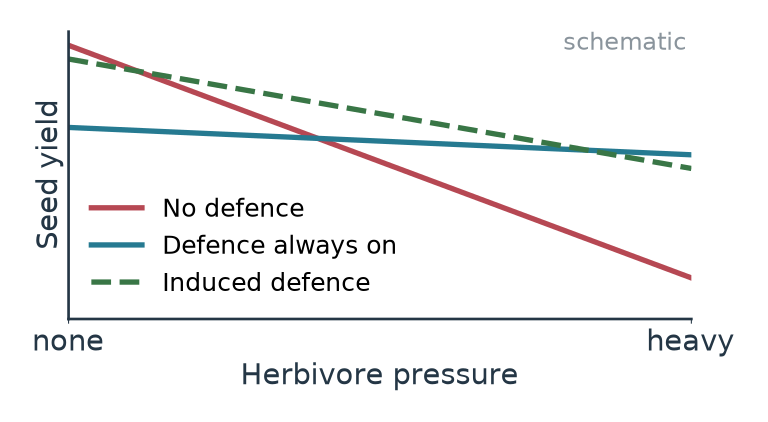
Defence uses carbon, nitrogen and energy that could go into growth.
An Arabidopsis mutant lacking ten JAZ repressors has constitutive JA signalling : strong insect resistance, but much smaller plants and fewer seeds (Guo et al., 2018).
A plant with defence always on loses without attack and wins under heavy attack.
So induced defence is common: pay only when attacked.
To test ideas like these we need genes, mutants and a model plant.
Exercise 2.7 a and b. The JAZ decuple mutant is a direct test of the trade-off: removing the brakes on JA signalling buys defence at a growth cost. Stress the table: whether a defence is worth it depends on the environment, which is also why a crop bred for a pest-free greenhouse can fail in the field. Transition: almost everything on the previous slides was discovered in one small plant.
Arabidopsis thaliana : the model plant
Life cycle 6–8 weeks
Many generations per year
Small genome (~135 Mb), sequenced 2000
Every gene has an ID, e.g. FT = AT1G65730
Self-pollinating, many seeds
Mutants breed true
Floral-dip transformation
No tissue culture needed
Large mutant collections
A knockout for almost every gene
Gene records are collected in TAIR . A mechanism found here must be tested again in a crop.
How do we put a new gene into a plant?
Exercise 3.1. The stable identifier (AGI code) matters because gene names and aliases change; AT1G65730 means chromosome 1, gene 65730. Floral dip means the inflorescence is dipped in an Agrobacterium suspension and some of the seeds are transformed, so Arabidopsis avoids the tissue culture step that most crops need. The last bullet is the bridge to crops: FT from P4 exists in rice and tomato, but its regulation differs. Transition: Agrobacterium is the natural genetic engineer that made plant transformation possible.
Agrobacterium : nature’s genetic engineer
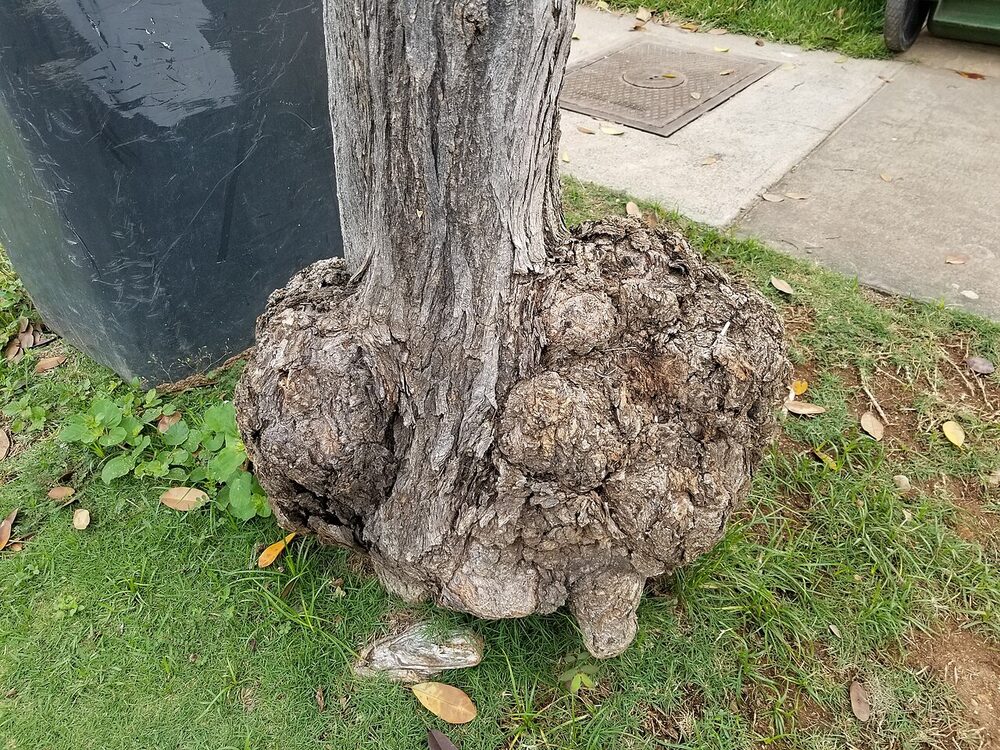
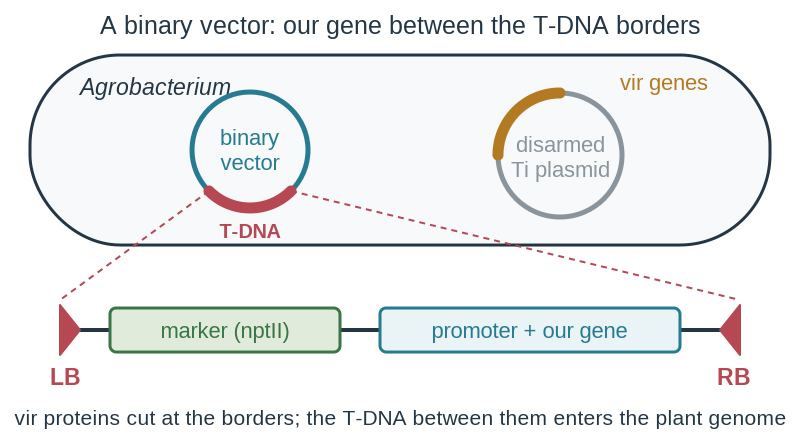
Agrobacterium tumefaciens causes crown gall tumours.It transfers part of its Ti plasmid , the T-DNA , into the plant genome.
The T-DNA lies between left and right borders ; the bacterium’s vir genes cut it out and transfer it.
Wild T-DNA carries auxin and cytokinin synthesis genes: the infected cells overproduce both hormones and grow into a tumour.
Anything between the borders is transferred. Can we swap in our own gene?
The natural system links to P4: the bacterium makes the plant cells overproduce auxin and cytokinin, the same hormones we use in tissue culture later in this lecture. Transition: the binary vector.
The binary vector
A binary vector carries a T-DNA in which the tumour genes are replaced by our gene plus a selectable marker . A disarmed Ti plasmid supplies the vir genes.
Stable transformation: T-DNA integrated and inherited .Transient expression: not integrated, lost within days; used for fast tests in leaves.Without Agrobacterium : particle bombardment , or PEG / electroporation of protoplasts .
Exercises 4.3 and 4.4. Splitting the system into two plasmids makes the small binary vector easy to handle in E. coli. Particle bombardment was important for cereals, which were initially hard to transform with Agrobacterium. Transition: the full workflow.
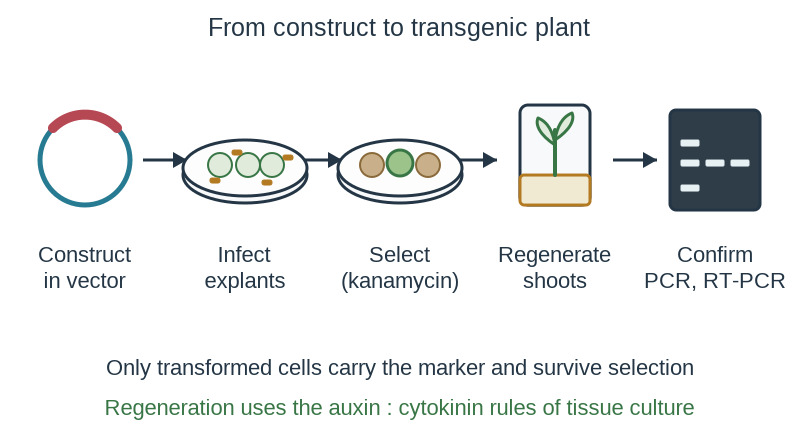
From construct to transgenic plant
Only a few cells are transformed. A selectable marker in the same T-DNA lets only those survive:
nptII Kanamycin
hpt Hygromycin
bar Glufosinate (herbicide)
Confirm the insert by PCR and its expression by RT-PCR or a protein assay.
Exercises 4.1 and 4.2. The order is the one students must reproduce: construct, co-cultivation, selection, regeneration, confirmation (by PCR for the insert and RT-PCR or a protein assay for expression). The marker and the gene of interest sit in the same T-DNA, so surviving cells usually carry both. Transition: regeneration relies on a property of plant cells that animal cells mostly lack.
Tissue culture: totipotency
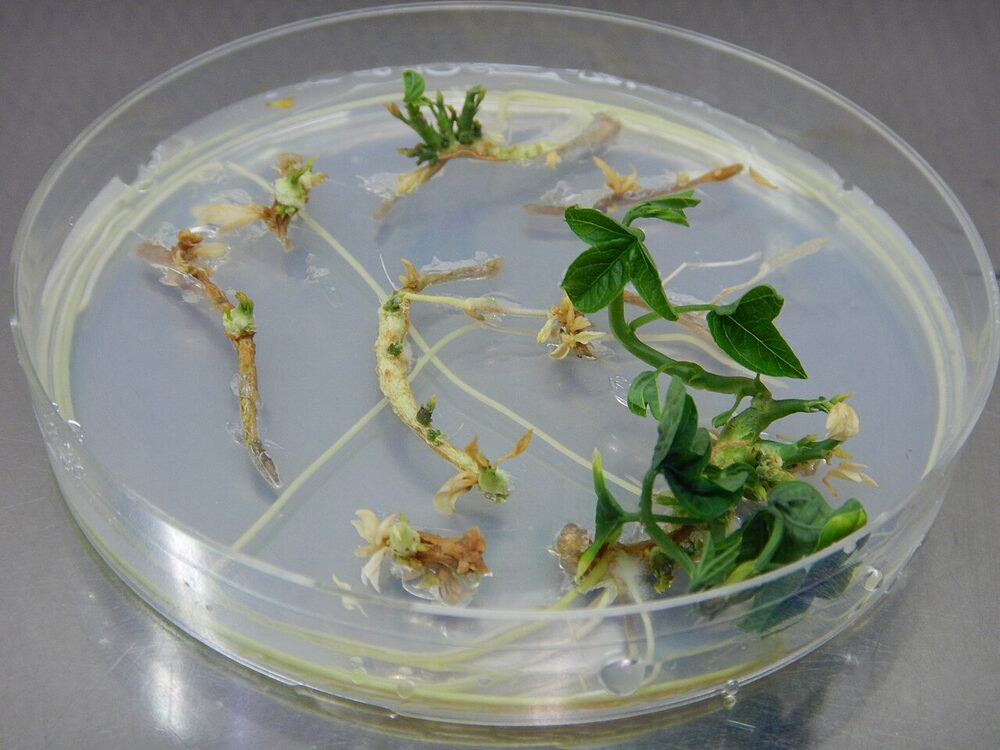
Totipotency: many differentiated plant cells can dedifferentiate and regenerate a whole plant .A single transformed cell can therefore become a transgenic plant.
Typical sequence: explant → callus → shoots → roots → plantlet in soil.
What decides whether the culture makes roots, shoots or callus?
Exercise 4.5. Most animal cells lose this capacity during differentiation; plant cells keep it, which is what makes transformation followed by regeneration possible. Transition: hormone ratios.
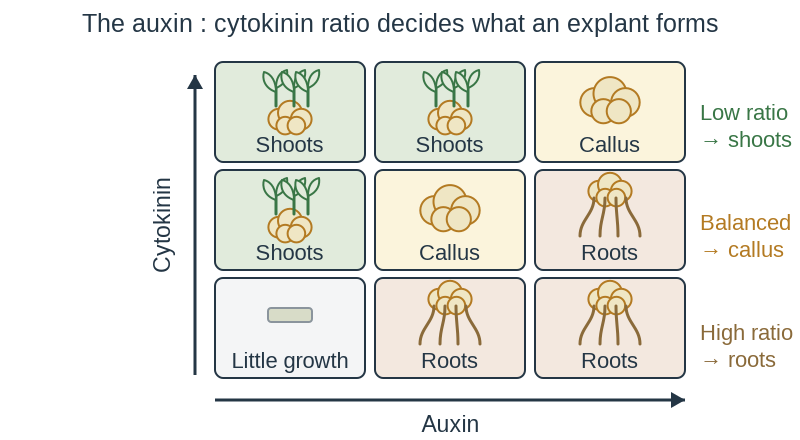
Tissue culture: the auxin : cytokinin ratio
Skoog and Miller (1957), tobacco:
High Roots
Intermediate
Callus
Low (high cytokinin)Shoots
Exact concentrations depend on species, genotype and tissue.
Exercise 4.6. Connect to the hormones from P4: auxin promotes root initiation (rooting powder), cytokinin promotes shoot meristems. The crown gall is a callus caused by the bacterium’s own auxin and cytokinin genes. Transition: try it.
Try it: grow an explant
Start at the balanced medium: the explant forms callus. Drag the point towards high cytokinin and shoots appear; towards high auxin and roots appear. Ask the room to predict before each move. Then tick “wild Agrobacterium” with no hormones in the medium: the explant still forms a tumour, because the T-DNA makes the cells produce their own auxin and cytokinin. This joins the crown-gall slide to the Skoog–Miller map. The model is a rule of thumb, not fitted to data.
Is the phenotype caused by the transgene?
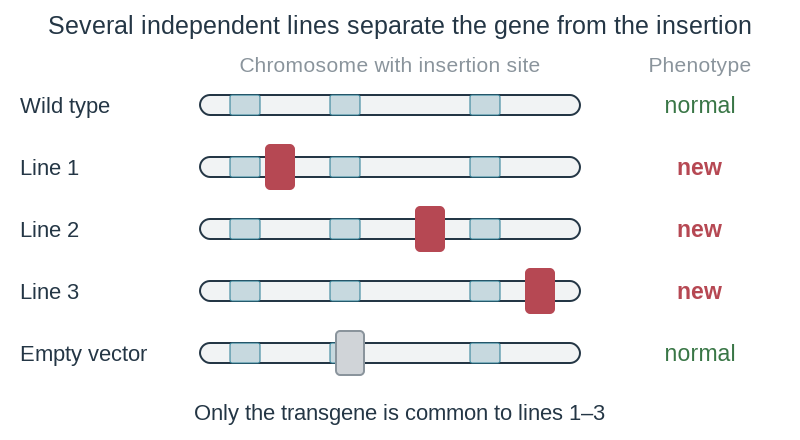
The T-DNA inserts at a random position : it can disrupt or activate a native gene.
Tissue culture itself causes mutations: somaclonal variation .
So compare several independent lines and an empty-vector control.
A phenotype seen in all independent lines, and absent from the controls, is attributed to the transgene.
Exercise 4.7. Each independent line has the T-DNA in a different place and has been through its own culture, so position effects and somaclonal mutations differ between lines; only the transgene is common to all. The empty-vector control shows the effect of the transformation procedure itself. Expression level also varies between lines because of insertion position, which is another reason to analyse several. Transition: promoters.
Reporters: making expression visible
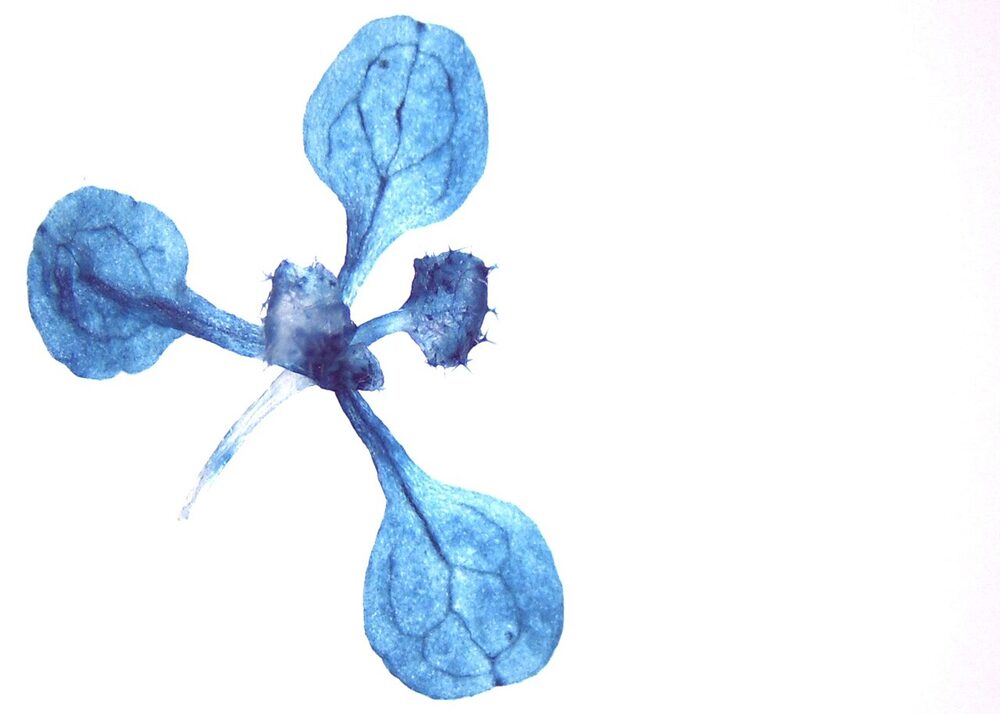
GUS (β-glucuronidase)Blue product after staining with X-Gluc
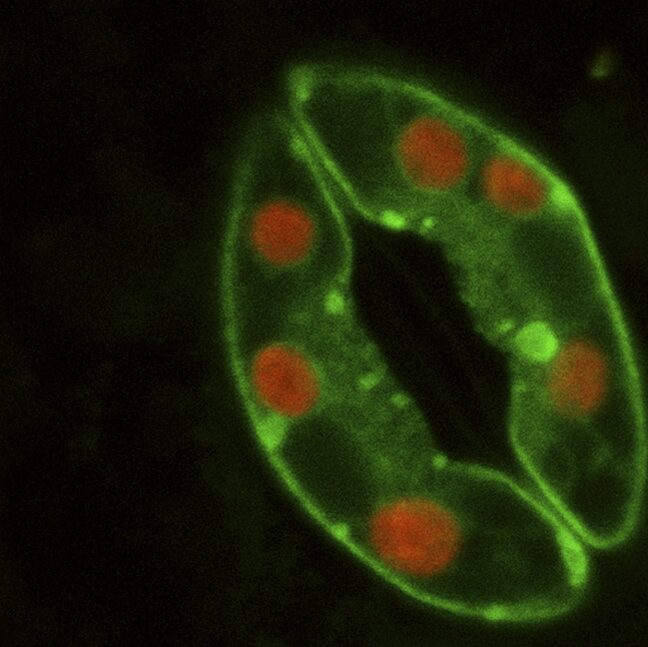
GFP Green fluorescence under blue light
Luciferase Light emission when luciferin is supplied
Fuse a promoter to a reporter to see where and when it is active.
A stress-induced promoter + reporter gives a plant that signals when stressed , but it must be tested for specificity.
Exercise 5.2. Reporters fused to a promoter show where and when that promoter is active; this was how the senescence promoter in P4 was characterised. Many stress promoters respond to several stresses, so a reporter plant used as a sensor needs controls. Transition: back to the maize field, with crops that are actually grown.
GM crops in the field
Insect resistance (maize, cotton)cry Bacillus thuringiensis (Bt)
Herbicide tolerance (soybean, maize)Bacterial EPSP synthase insensitive to glyphosate
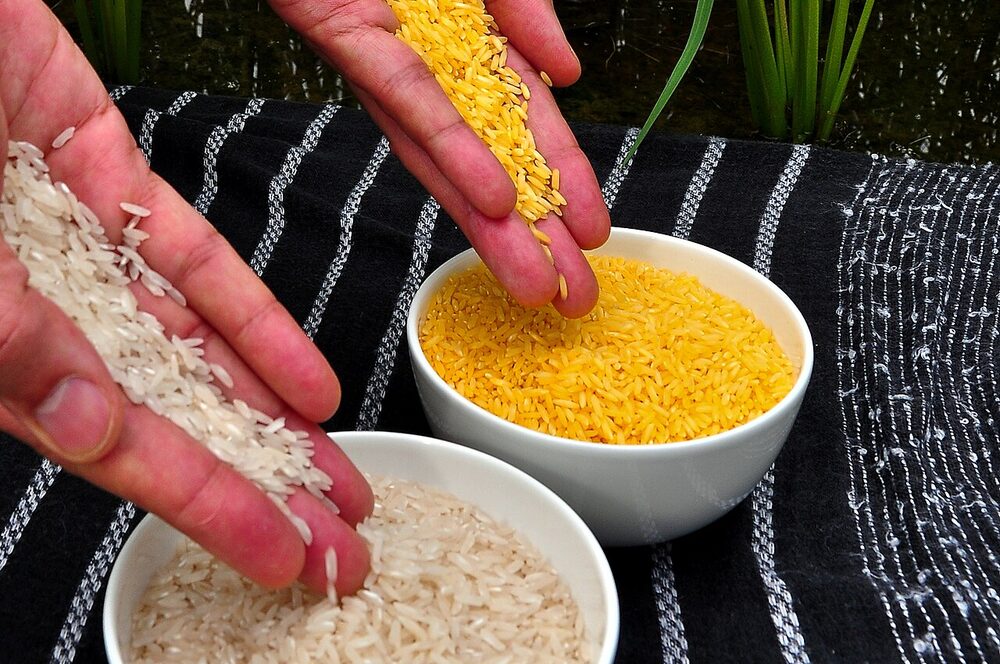
Golden Rice Carotenoid synthesis genes in the endosperm → β-carotene
Golden Rice targets vitamin A deficiency: β-carotene is provitamin A, and normal rice endosperm makes none.
How does the Bt protein kill a caterpillar but not us?
Exercise 6.1. Glyphosate inhibits EPSP synthase in the shikimate pathway, which makes aromatic amino acids; the bacterial enzyme still works in its presence. Transition: the Bt mechanism.
How Bt toxin works
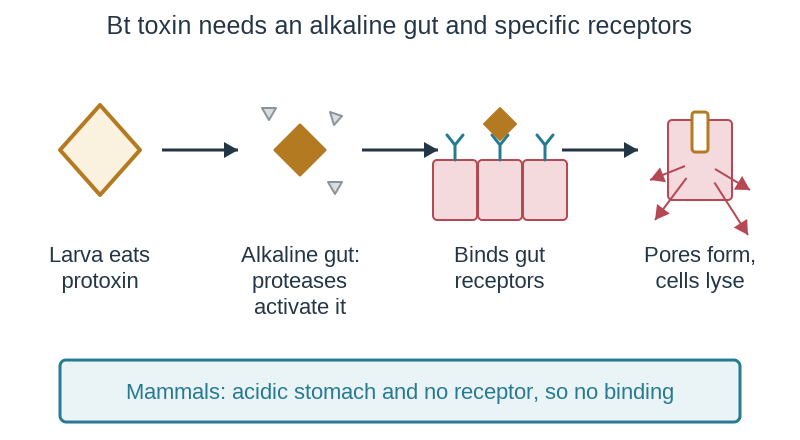
The caterpillar eats the Cry protoxin .
In the alkaline larval gut, proteases activate it.
It binds specific receptors on gut epithelial cells and forms pores .
Gut cells lyse; the larva stops feeding and dies.
Safe for mammals: an acidic stomach and no receptors for the toxin.
If every plant in the field kills the pest, what does natural selection do?
Exercise 6.2. The mechanism explains the specificity: each Cry protein matches receptors in a particular insect group. Bt sprays have been used in organic farming for decades. Transition: resistance evolution.
The refuge strategy
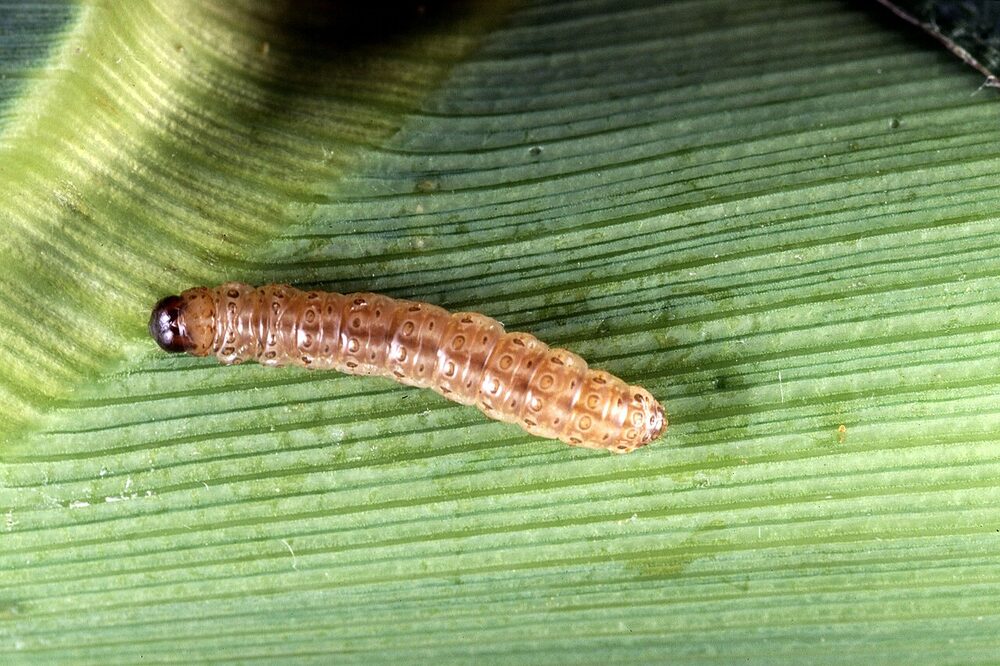
Bt maize selects for resistance alleles in the pest, the European corn borer.
A refuge of non-Bt plants is grown next to the Bt crop.
Susceptible insects from the refuge mate with the rare resistant survivors.
Resistance is usually recessive , so the heterozygous offspring still die on Bt maize, and resistance evolves much more slowly .
How much refuge is enough? Try it.
Exercise 6.3. The refuge is applied evolution: the same natural selection from A1, now in a pest population. Because resistant insects are rare, they almost always mate with susceptible insects from the refuge. Transition: the demo.
Try it: Bt resistance and the refuge
Start with no refuge: the resistance allele reaches 50% in about 15 generations. Set a 20% refuge with a recessive allele (h = 0): more than 150 generations. Then make the allele dominant (h = 1) with the same refuge: the refuge helps far less, because heterozygotes now survive on Bt maize. This is why refuges are combined with a high-dose Bt crop that kills heterozygotes. Tick the drift option to show that chance matters when the allele is very rare. Ask: what would farmers gain by planting no refuge, and who pays when resistance appears?
Genome editing versus transgenesis
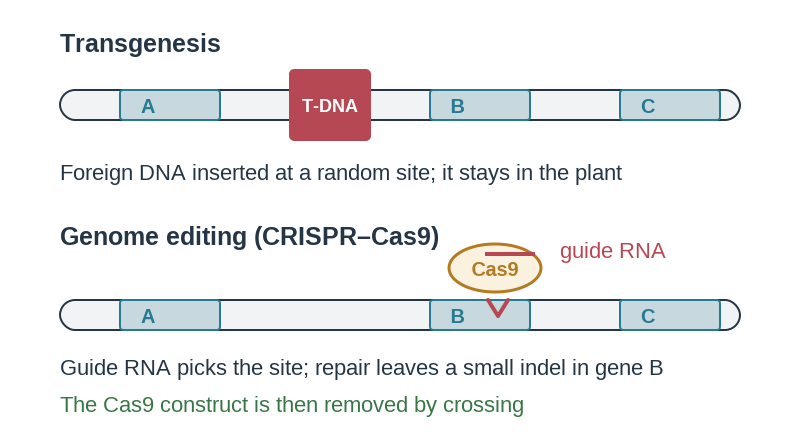
Change
Foreign DNA inserted
Targeted cut in a gene
Position
Random
Chosen by guide RNA
Final plant
Carries the transgene
Small mutation; Cas9 crossed out
The final edited plant may carry only a small deletion that could also arise by mutation.
The science says what a crop does. Should it be grown? That is a different kind of question.
Exercise 6.4. Whether edited plants are regulated as GM differs between countries. Transition: empirical versus value questions.
Evidence and values
Does pollen from a GM crop reach a wild relative 100 m away?
Empirical Measure gene flow in the field
Does a Bt crop reduce insecticide use in a region?
Empirical Compare spraying records
How much uncertainty about environmental effects is acceptable?
Value Weigh benefits and risks: a societal choice
Who should decide whether a GM crop is grown?
Value Governance and law
Empirical questions are settled by data ; value questions by argument and decision .
Data inform value questions but do not answer them.
Risks depend on the trait and setting , not on the label “GM”: gene flow matters only where wild relatives grow.
Exercise 6.5. The skill is classification: a question that a measurement could settle is empirical, even if the measurement is hard. Students should not be asked to take a side here; the point is to recognise which kind of question is being asked, so that a debate does not confuse the two. Example of the last bullet: Bt maize in Europe has no wild relatives to cross with, while in Mexico, the centre of maize diversity, gene flow into landraces is a real question. This closes the lecture and the plant half of the course.
Summary
Abiotic stress
drought: low ψ; salt: osmotic + Na⁺/Cl⁻ toxicity; heat: denaturation; freezing: extracellular ice
Drought response
ABA → stomata close; cost: less CO₂, warmer leaf
Tolerance
compatible solutes, Na⁺ exclusion and vacuolar storage, HSPs, LEA proteins, antioxidants
Defence
constitutive vs induced; HR starves biotrophs; SAR needs SA
SA vs JA
SA: biotrophs; JA (+ ethylene): necrotrophs and chewing insects; often antagonistic
Trade-off
constant defence costs growth; induced defence pays only under attack
Transformation
binary vector → Agrobacterium → selection → regeneration → confirmation
Tissue culture
high auxin : cytokinin → roots; low → shoots; intermediate → callus
GM crops
Bt kills via gut receptors; refuges delay resistance; CRISPR edits without inserting DNA
The plant half: P1 built the plant; P2 supplied water and minerals; P3 fixed and moved carbon; P4 used signals to decide what to build and when; P5 used the same signals to survive. The animal half solved the same problems differently: feedback (ABA closing stomata; ADH in the kidney), hormones carried in transport fluids (phloem, blood), and exchange surfaces (leaf and root, lung and gut).
Revision questions · Tutorial · Exercises · Quiz
Read the table in the order of the lecture: the field’s physical stresses, its attackers, and the tools for changing the crop. Then step back to the whole course. Both halves start from the same physical problem set out in A1: getting resources to cells across exchange surfaces and keeping conditions stable. ABA and stomatal closure is a negative feedback loop just like ADH and water reabsorption in A4: a fall in water status triggers a hormone that reduces water loss. The revision page has integration questions that combine units from each half.