What is epigenetics?
Chromatin, histone marks and DNA methylation
One genome, many cell types
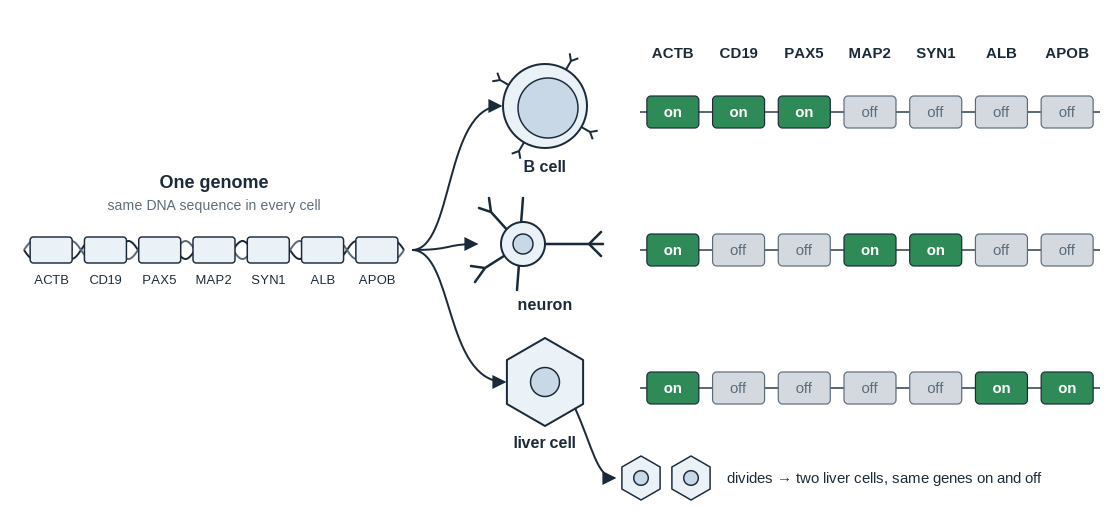
- A B cell, a neuron and a liver cell share the same DNA sequence, but express different sets of genes.
- The identity is stable: a liver cell divides into liver cells, not neurons, long after the signal that made it a liver cell is gone.
- So something besides the sequence is (1) different between cell types and (2) copied when a cell divides.
What does “epigenetic” mean?
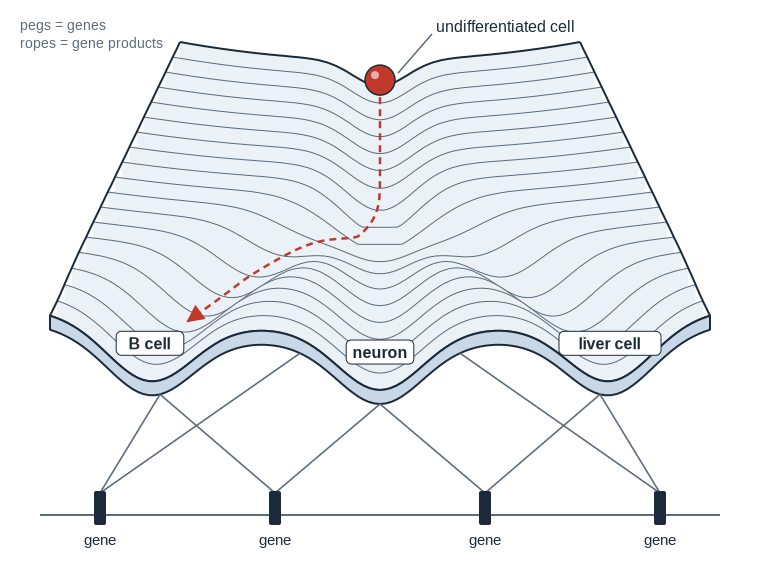
- Waddington (1940s–50s): the “epigenetic landscape”. A cell rolls downhill into one of several valleys (fates); the genes shape the landscape.
- Narrow definition (Riggs et al. 1996): mitotically and/or meiotically heritable changes in gene function that cannot be explained by changes in DNA sequence.
- Broad definition (Bird 2007): the structural adaptation of chromosomal regions so as to register, signal or perpetuate altered activity states.
- In practice “epigenomics” means measuring chromatin and DNA methylation genome-wide, whether or not the state is heritable.
Two meters of DNA in a nucleus
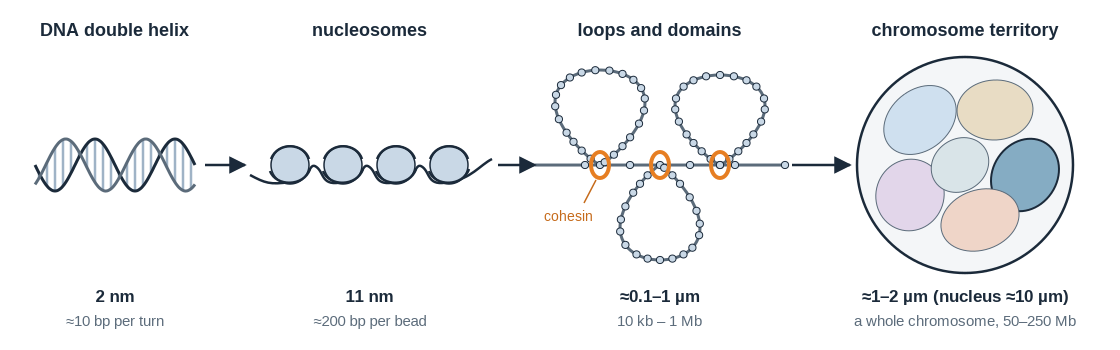
- A human diploid genome is 6.4 \times 10^9 bp, about 2 m of DNA, packed into a nucleus about 10 µm across.
- Packing is hierarchical: DNA → nucleosomes (“beads on a string”, 11 nm) → loops and domains → chromosome territories.
- Packing is not just storage: the more compact a region, the harder it is for proteins to reach the DNA.
The nucleosome
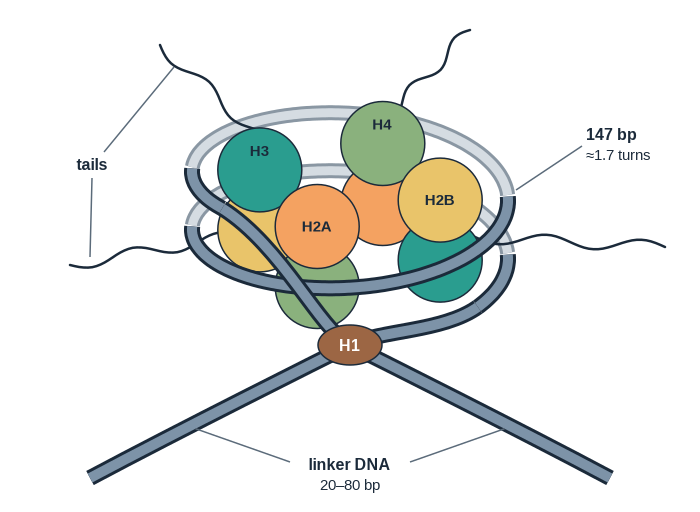
- 147 bp of DNA wrapped about 1.7 turns around a histone octamer: two copies each of H2A, H2B, H3 and H4.
- Nucleosomes are separated by linker DNA (about 20–80 bp). The linker histone H1 sits where DNA enters and leaves.
- Each histone has a flexible tail that sticks out of the particle. The tails carry most of the modifications.
Nucleosomes come in a regular repeat
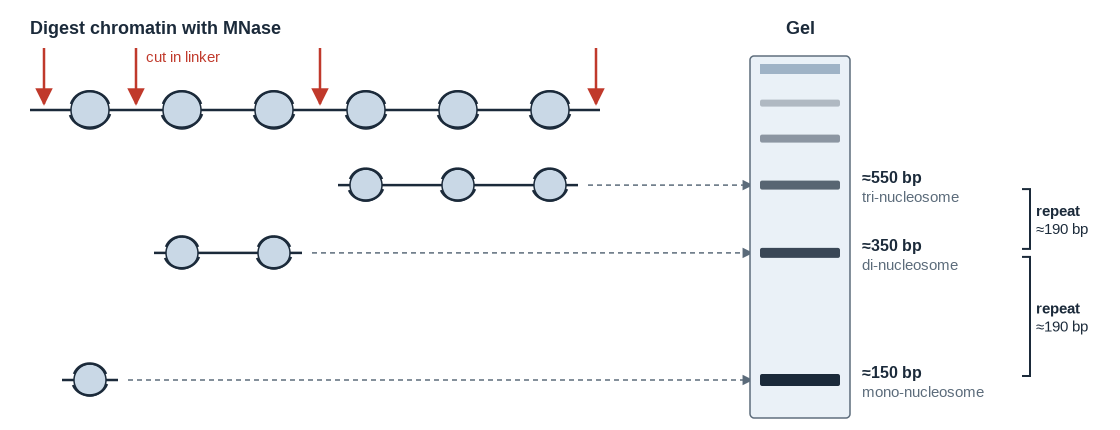
- Digest chromatin with an enzyme that cuts only linker DNA (micrococcal nuclease, MNase) and you get a ladder: about 150, 350, 550 bp …: one, two, three nucleosomes.
- The step of the ladder is the nucleosome repeat length, about 190–200 bp in human cells (147 bp core + linker).
- You will see the same ladder in the fragment lengths of every ATAC-seq library.
Nucleosomes block access; regulatory DNA is open
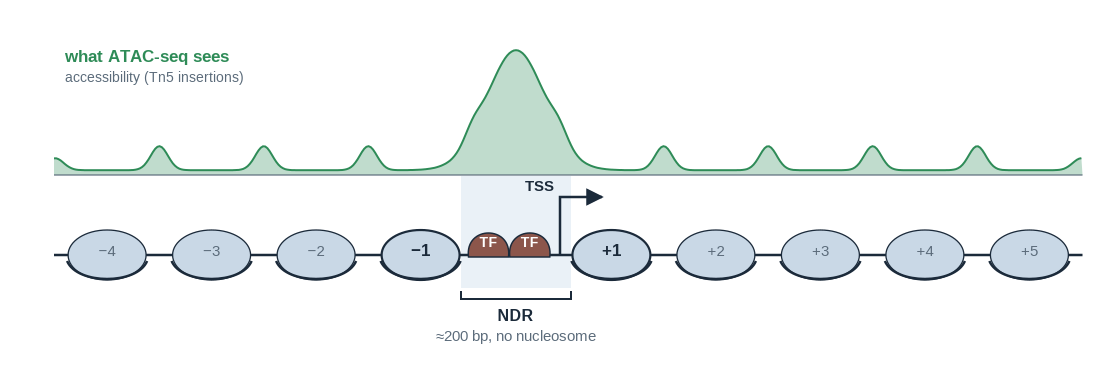
- Most of the genome is wrapped in nucleosomes. Active promoters and enhancers have a nucleosome-depleted region (NDR) of a few hundred bp.
- Transcription factors bind in the NDR; well-positioned nucleosomes flank it (the +1 nucleosome sits just downstream of the transcription start site, TSS).
- “Open” (accessible) chromatin is what ATAC-seq and DNase-seq measure: about 1–3% of the genome in a given cell type.
Histone tails carry chemical modifications
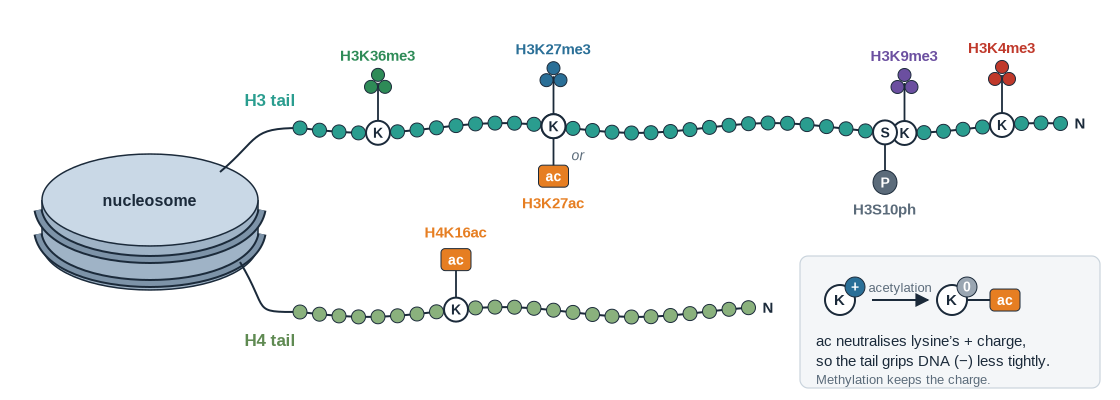
- Enzymes add small groups to amino acids in the tails: acetylation (ac) and methylation (me1, me2, me3) of lysines (K), phosphorylation of serines, and more.
- Over 100 different modifications are known. A handful of them are well understood and mapped routinely; those are the ones in this course.
- Modifications act in two ways: they change how tightly the histone holds DNA, and they recruit proteins that recognise them.
Reading the name of a histone mark
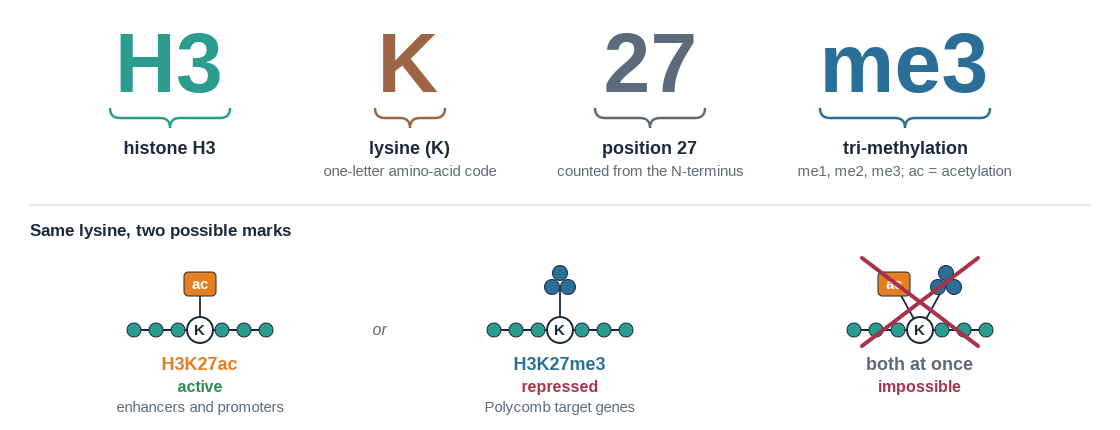
- H3K27me3 = histone H3, lysine (K) at position 27, tri-methylated.
- H3K27ac is the same lysine, acetylated. One lysine can carry either mark but not both: the two are mutually exclusive, and they mean opposite things.
- Positions count from the N-terminus of the mature histone.
Writers, readers and erasers
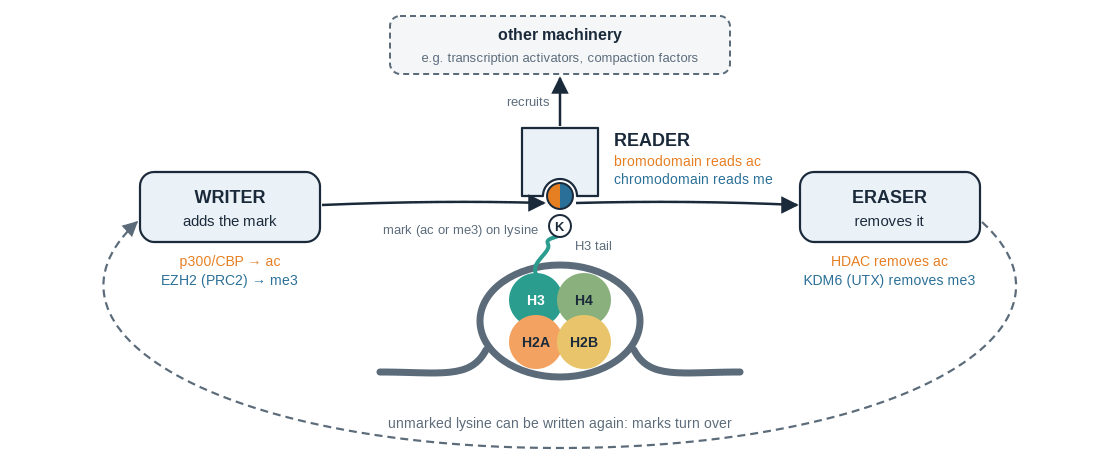
- Writers add a mark: histone acetyltransferases (HATs, e.g. p300/CBP), lysine methyltransferases (e.g. EZH2, SETD2).
- Erasers remove it: histone deacetylases (HDACs), lysine demethylases (e.g. KDM6/UTX).
- Readers bind it and bring in other machinery: bromodomains read acetyl-lysine, chromodomains and PHD fingers read methyl-lysine.
- Marks are dynamic: they are turned over by writers and erasers, some within minutes.
The marks you will meet in this course
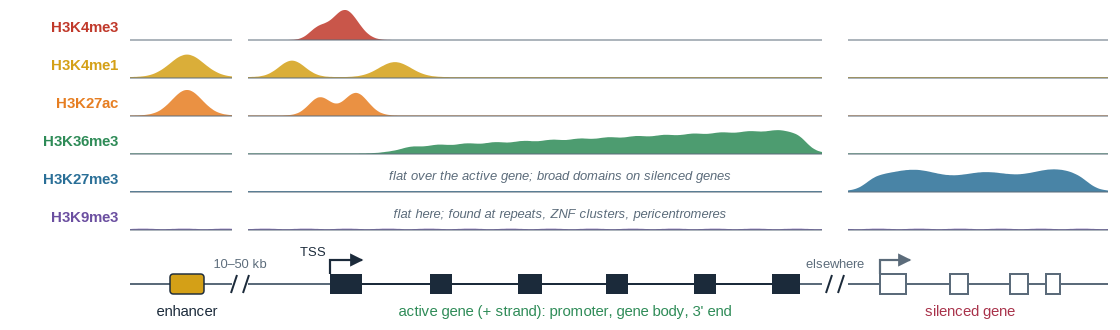
| mark | where | meaning |
|---|---|---|
| H3K4me3 | promoters (around the TSS) | active or poised promoter |
| H3K4me1 | enhancers (and flanks of promoters) | enhancer, active or primed |
| H3K27ac | active promoters and enhancers | active regulatory element |
| H3K36me3 | bodies of transcribed genes | transcription has passed here |
| H3K27me3 | broad domains over silenced genes | Polycomb repression (facultative) |
| H3K9me3 | repeats, ZNF gene clusters, pericentromeres | constitutive heterochromatin |
Real data: an active gene in B cells
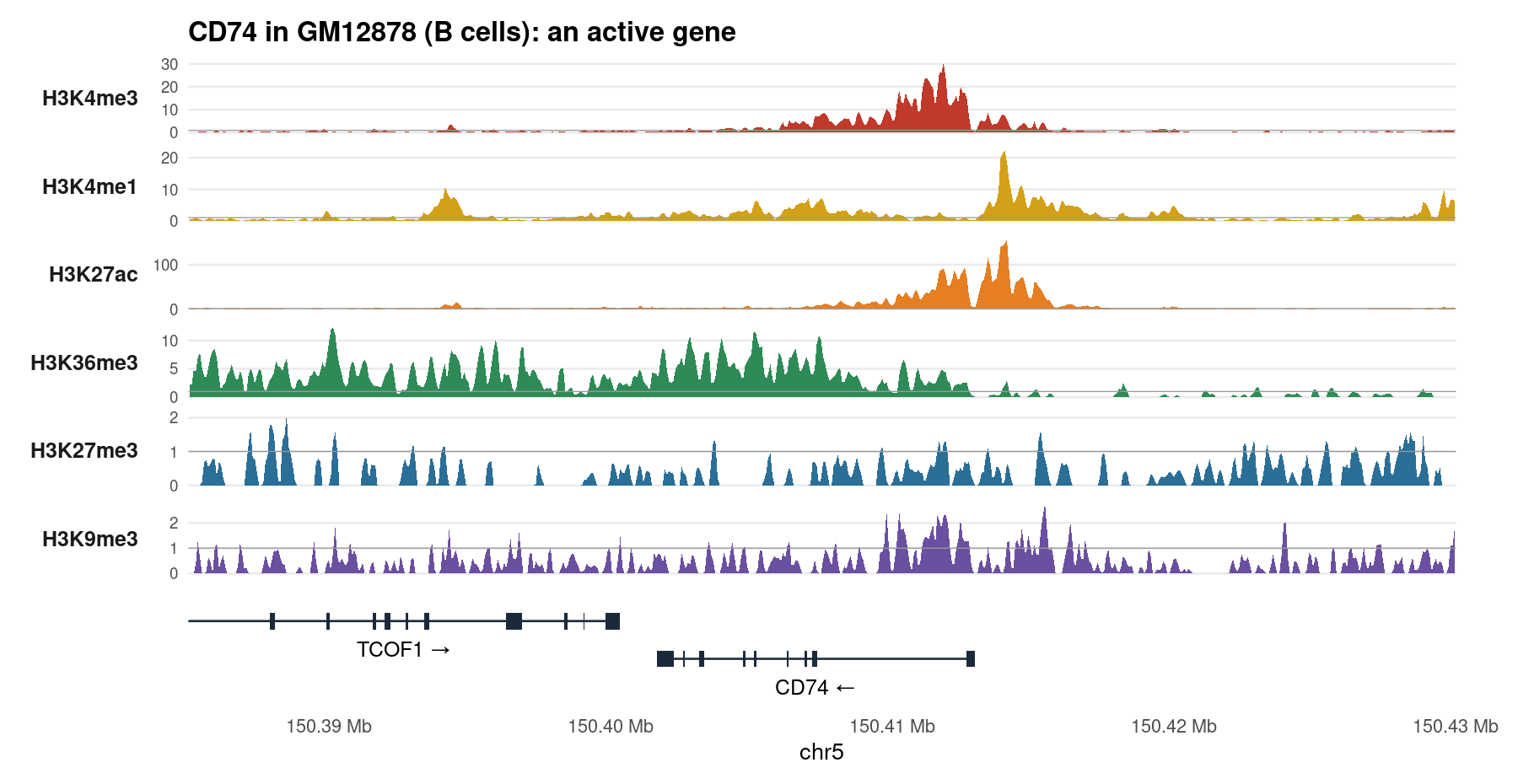
- ENCODE ChIP-seq in GM12878, a B-lymphoblastoid cell line (the course’s main dataset). Each track: enrichment over input (fold change).
- H3K4me3 and H3K27ac peak at the promoter; H3K36me3 covers the gene body; H3K27me3 and H3K9me3 are absent.
Real data: two kinds of silence
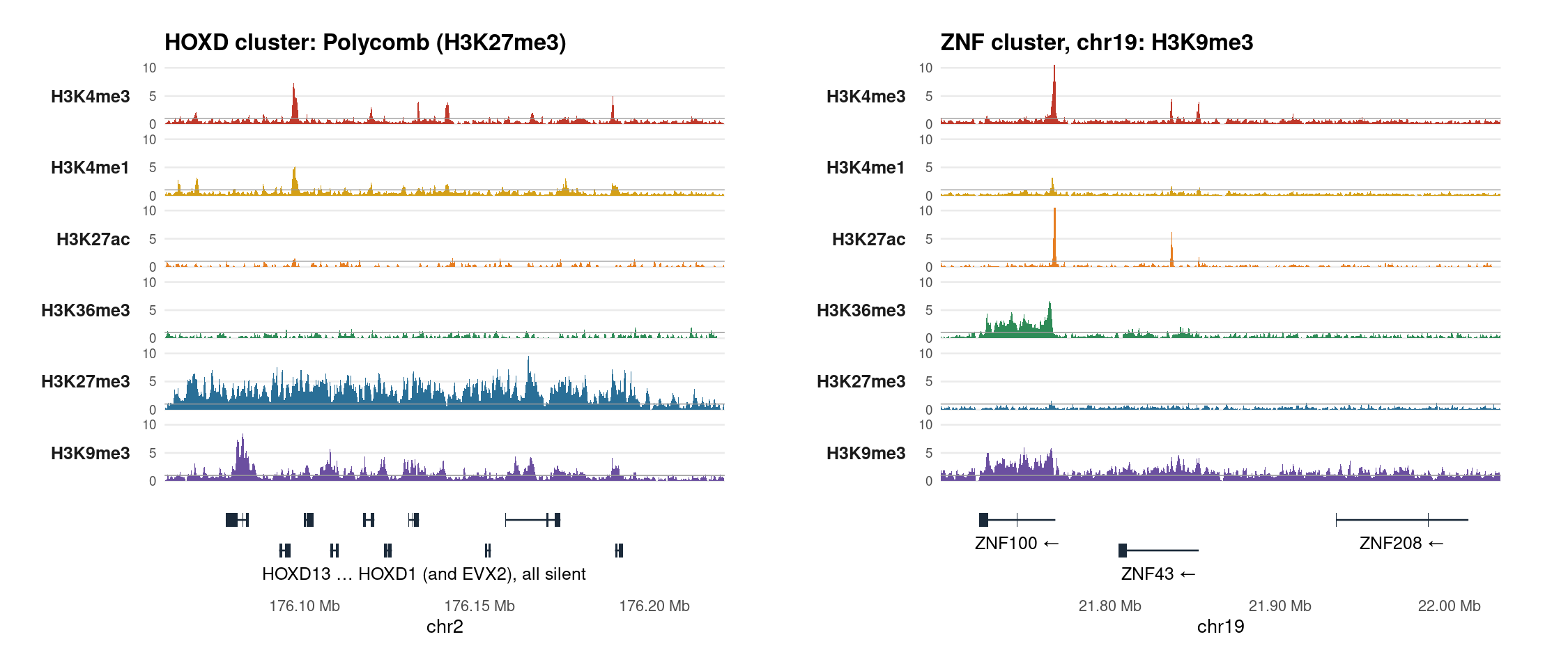
- Left: the HOXD cluster. Developmental genes, silent in B cells, covered by a broad H3K27me3 domain (Polycomb).
- Right: a zinc-finger (ZNF) gene cluster on chr19, marked by H3K9me3 (with H3K36me3 over the gene bodies that are still transcribed).
- Repressive marks form broad domains (tens to hundreds of kb), not sharp peaks: this matters for peak calling later.
Euchromatin and heterochromatin
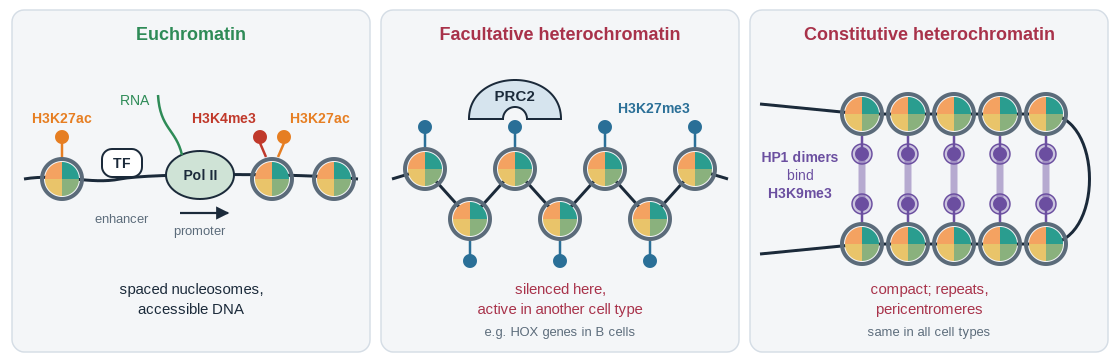
- Euchromatin: open, gene-rich, early-replicating, where most active genes are.
- Constitutive heterochromatin: compact, H3K9me3, read by HP1; repeats, pericentromeres, telomeres. The same in all cell types.
- Facultative heterochromatin: H3K27me3 (Polycomb); developmental genes silenced in this cell type but active in another.
Read–write feedback: how a mark can spread and persist
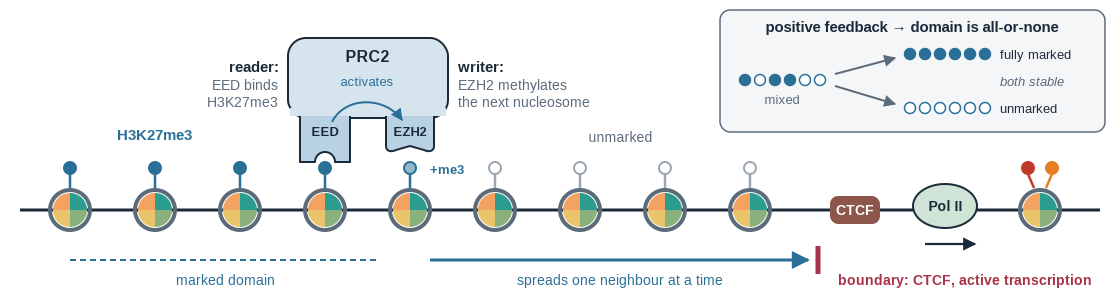
- Some writers carry a reader for their own product. PRC2 (writer of H3K27me3) is activated when its EED subunit binds H3K27me3; SUV39H1 (writer of H3K9me3) has a chromodomain that binds H3K9me3.
- A mark therefore recruits more of itself to neighbouring nucleosomes: domains spread until something stops them.
- The same loop can restore a mark after it is diluted, which is the key to memory.
Through DNA replication: diluted, then restored
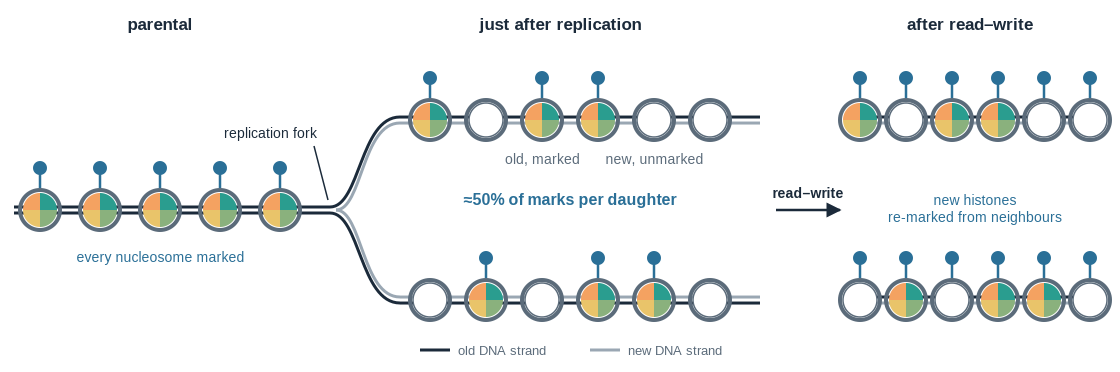
- At replication, old histones (with their marks) are split randomly between the two daughter strands; new, unmarked histones fill the gaps.
- Each daughter gets about half the marked nucleosomes. Read–write feedback then re-marks the new neighbours.
- Whether histone marks are truly self-sustaining through many divisions is still debated; for H3K27me3 the evidence is strongest.
DNA methylation: a mark on the DNA itself
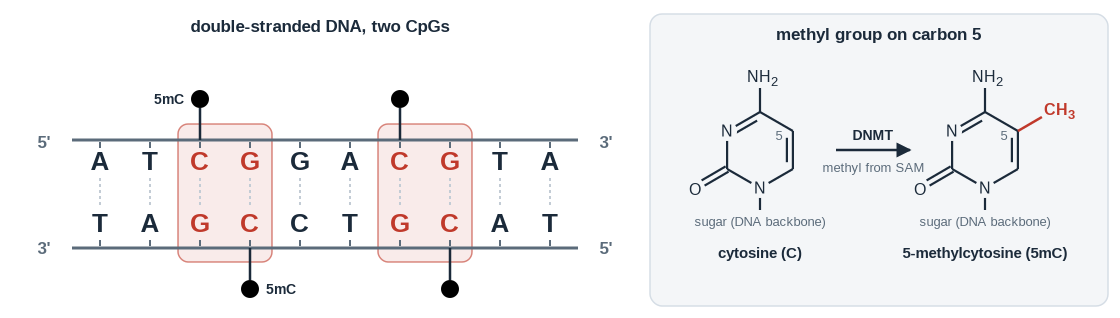
- In mammals, a methyl group is added to carbon 5 of cytosine, almost only in CpG dinucleotides: 5-methylcytosine (5mC).
- CpG is palindromic: both strands carry a CpG, and both are usually methylated together.
- About 70–80% of CpGs in a human somatic cell are methylated. The exceptions are mostly in CpG islands at promoters.
- Plants also methylate CHG and CHH (H = A, C or T).
Copying DNA methylation through replication
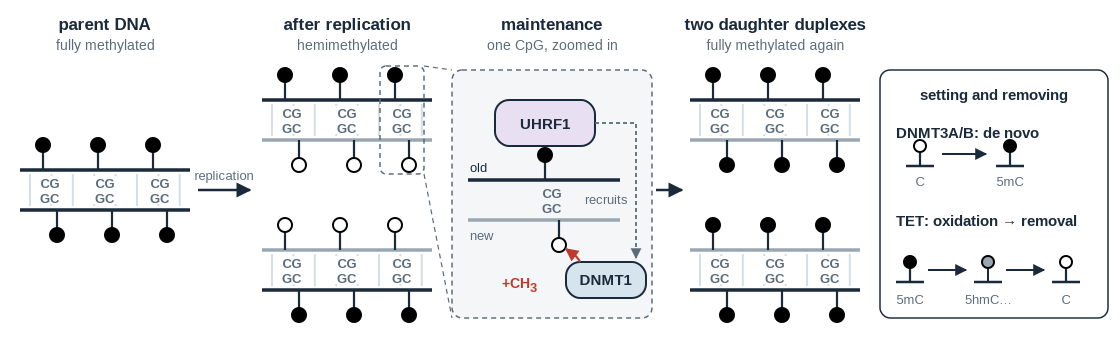
- After replication the new strand is unmethylated: each CpG is hemimethylated.
- UHRF1 recognises hemimethylated CpGs and recruits DNMT1, which methylates the new strand: the pattern is copied.
- DNMT3A/3B methylate de novo (new sites, e.g. during development); TET enzymes start active removal.
- Because the template is copied site by site, DNA methylation is the clearest example of a mitotically heritable epigenetic mark.
CpG islands
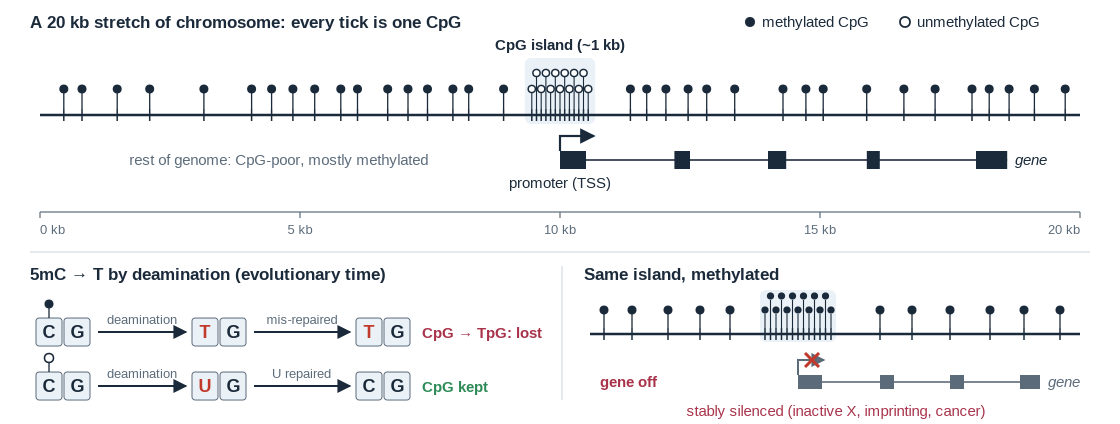
- The human genome has only about a quarter of the CpGs expected from its base composition. Methylated C mutates easily to T (spontaneous deamination), so CpGs are slowly lost.
- CpG islands (CGIs) are about 1 kb stretches that keep a high CpG density because they are unmethylated. About 60–70% of human gene promoters have one.
- CGI promoters are usually unmethylated even when the gene is off; methylation of a CGI promoter means stable silencing (inactive X, imprinted genes, some genes in cancer).
Remodelers and histone variants
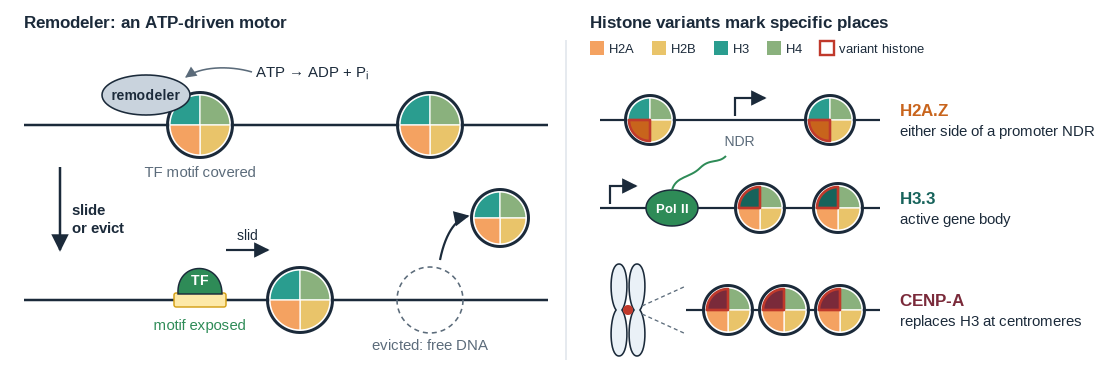
- Chromatin remodelers use ATP to slide, evict or exchange nucleosomes (e.g. SWI/SNF, ISWI, CHD, INO80 families). They create and maintain NDRs.
- Histone variants replace canonical histones at specific places: H2A.Z flanks promoters and enhancers, H3.3 is deposited in active genes independently of replication, CENP-A defines centromeres.
Beyond one dimension: the 3D genome
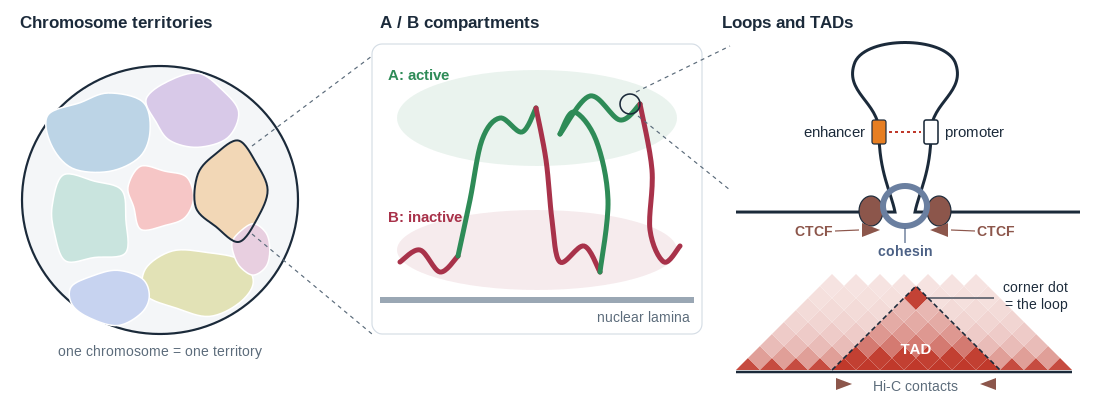
- Chromosomes occupy territories; active and inactive chromatin separate into A and B compartments.
- Within them, loops and topologically associating domains (TADs) bring enhancers close to the promoters they regulate, often over 10–1000 kb.
- Measured with Hi-C (3D genome units).
Epigenetic memory in action
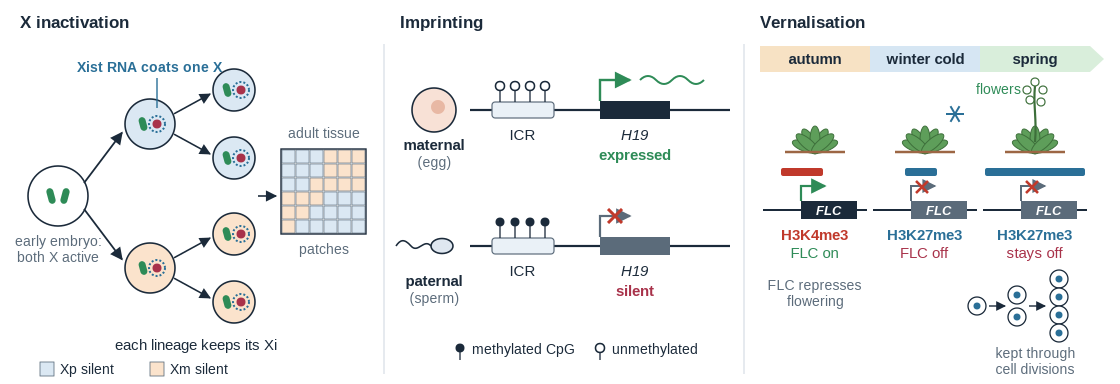
- X inactivation: in female mammals one X is silenced early in development (Xist RNA, H3K27me3, CGI methylation) and stays silent in all descendants.
- Genomic imprinting: some genes are expressed only from the maternal or only the paternal copy, set by DNA methylation in the germ line.
- Vernalisation in plants: Arabidopsis remembers winter. Cold silences the flowering repressor FLC by Polycomb (H3K27me3), and the silence is kept through cell divisions after it warms up, so the plant flowers in spring.
Cause or consequence?
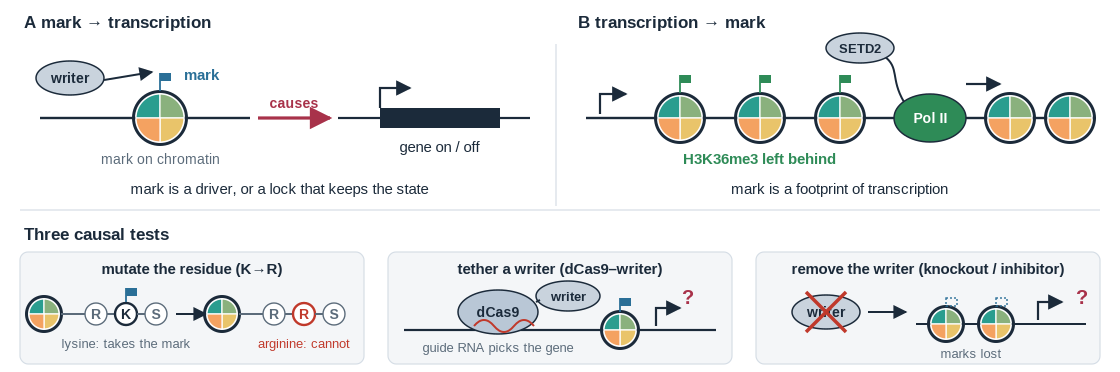
- Marks correlate with activity, but correlation does not show that the mark causes it. H3K36me3 is deposited because the gene is transcribed.
- Causal tests: replace a histone with a mutant that cannot be modified (e.g. lysine → arginine), tether a writer to a gene (epigenome editing: dCas9 fused to a writer or eraser), or remove the writer.
- Treat “epigenetic regulation of gene X” with care: is the mark a driver, a lock that keeps a decision, or a footprint of transcription?
What the assays in this course measure
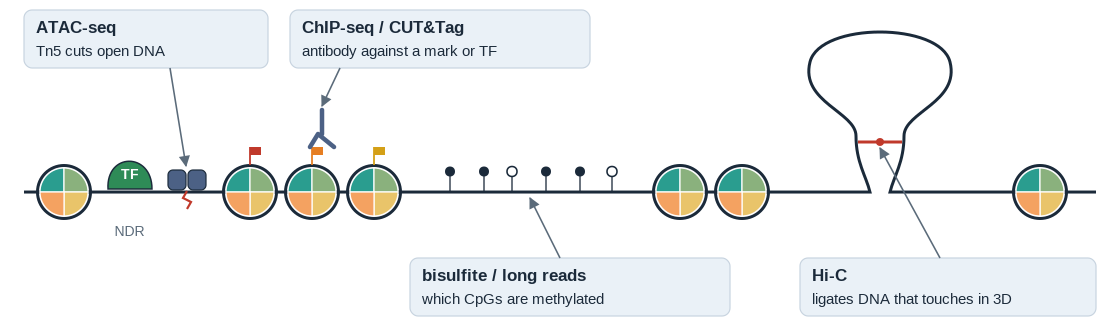
| question | assay | units |
|---|---|---|
| Where is the DNA accessible? | ATAC-seq (DNase-seq, MNase-seq) | ATAC-seq block |
| Where is a histone mark or a TF? | ChIP-seq, CUT&RUN, CUT&Tag | ChIP-seq block |
| Which CpGs are methylated? | bisulfite / EM-seq, arrays, long reads | methylation block |
| Which regions touch in 3D? | Hi-C, Micro-C | 3D genome block |