Likely reviewers for an upcoming grant, and mock reviews
Part 4: Literature, documents and the web
Introduction to agentic AI
About this lecture
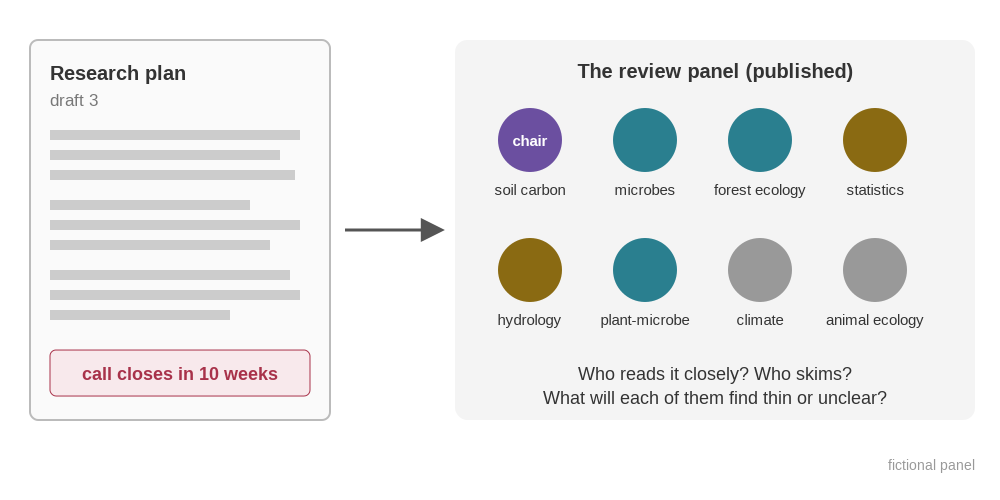
Many funders publish who sits on their review panels. Before you submit, you can ask: who is likely to read my proposal, what do they know, and what will they find thin or unclear? An agent can collect the panel, build an expertise profile of each member from public sources, match the profiles against your draft and write mock reviews using the funder’s own criteria.
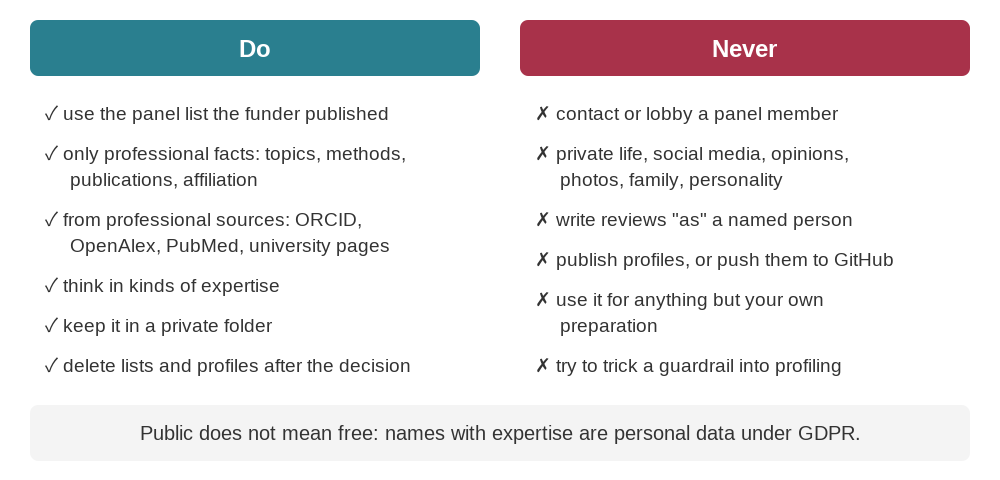
Ethics first. Panel members are people. Their public professional data are still personal data.
Profiles of expertise, not of people. Topics, methods, recent papers. Nothing else.
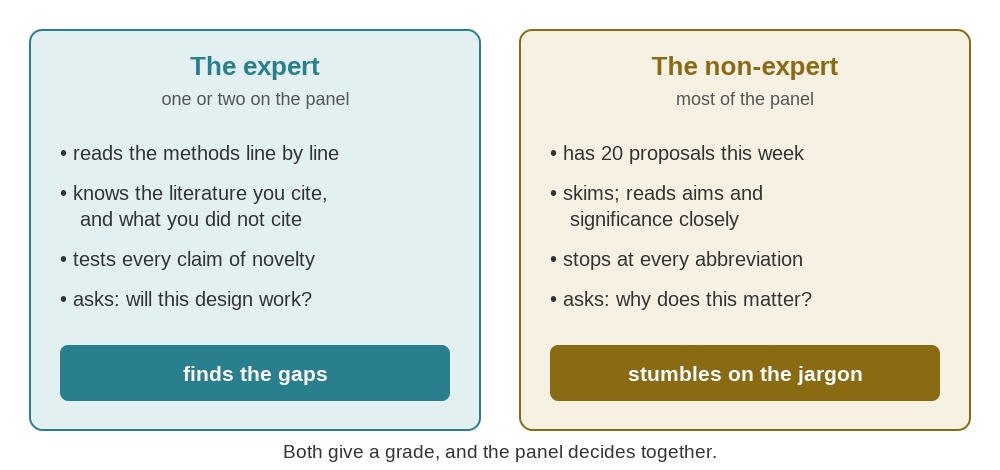
Two kinds of reader. The expert finds the gaps; the non-expert stumbles on the jargon.
Mock reviews use the funder’s criteria and are written from an expertise, never in a named person’s voice.
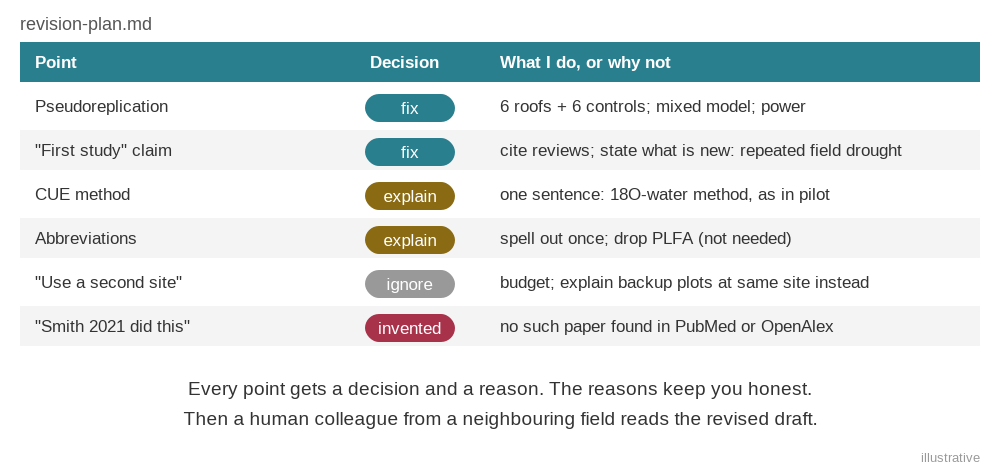
You judge the reviews. Fix, explain or ignore each point.
A hands-on unit. The worked example uses a synthetic proposal and a fictional panel; you apply it to a real call on your own computer. Builds on Collecting and analysing grant results and Literature review.
Your proposal will be read by a panel you can look up
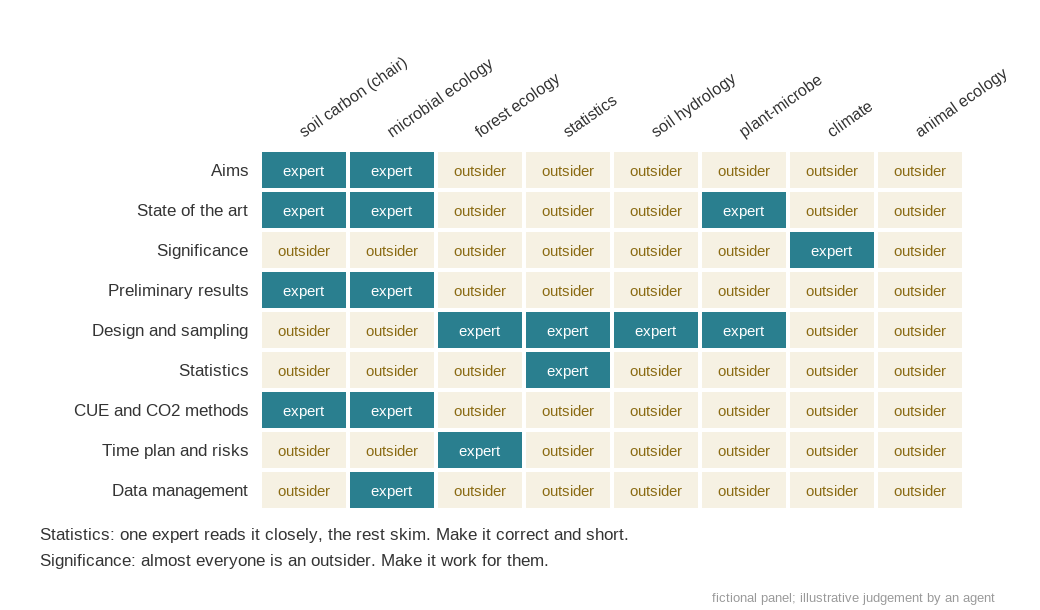
A panel has experts and non-experts, and both grade you
This is personal data, even when it is public
Never contact or lobby a reviewer; panels change
The ERC is explicit: applicants, potential applicants and host institutions must not contact reviewers; applications may be rejected for breach of research integrity. Other funders have similar rules on conflicts of interest and influence.
The aim is to make the proposal clearer and stronger for any competent reader, not to tailor it to one person’s taste or to flatter their work.
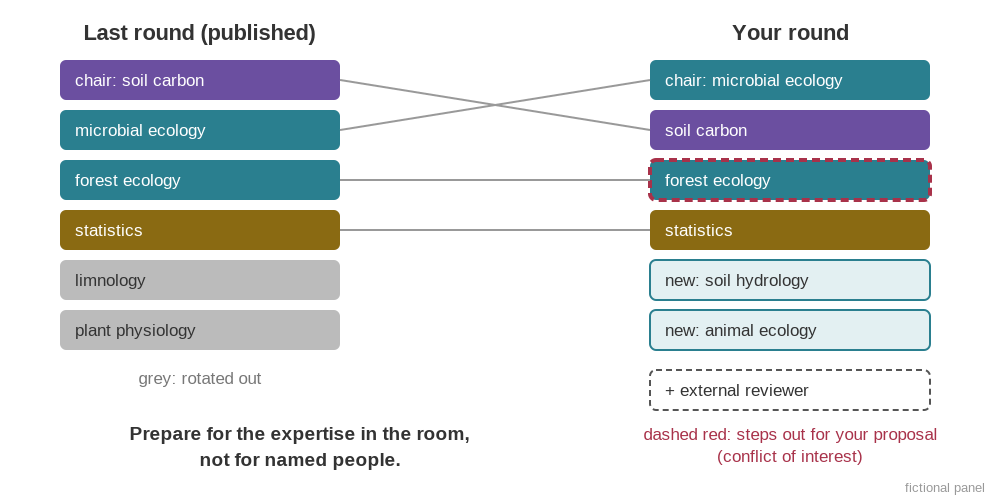
Panels change between rounds and are sometimes updated during a round. External reviewers may be added. Your analysis is about the kinds of expertise in the room, not about individuals.
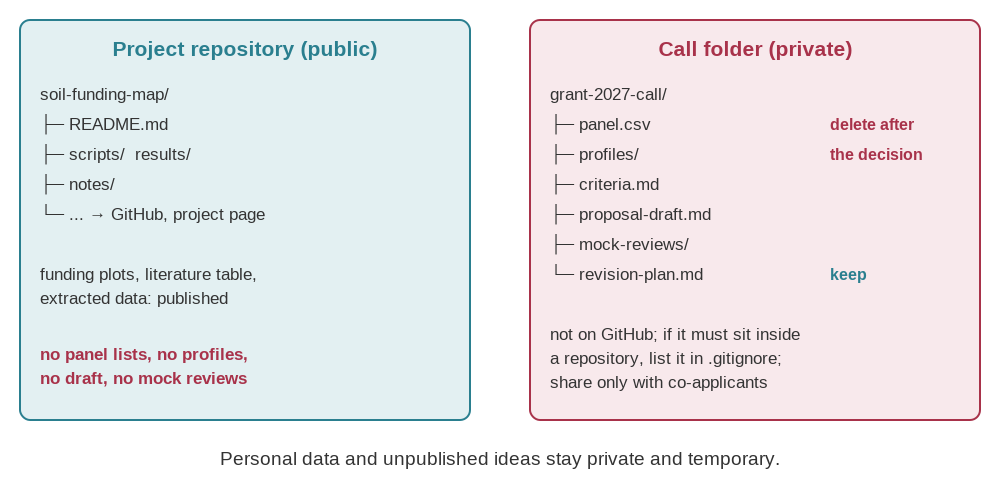
Keep it private: not on GitHub, not on your project page, not shared beyond your co-applicants.
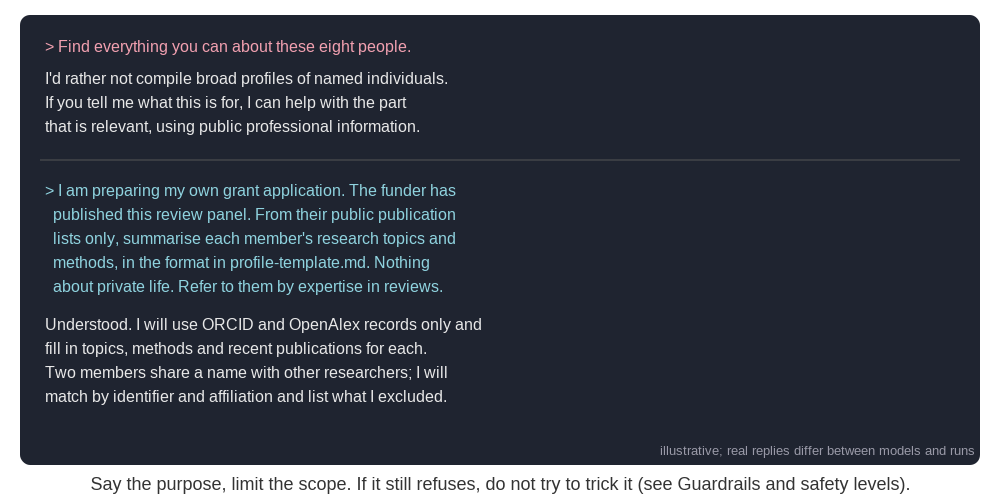
The agent may hesitate to profile named people; that is a guardrail
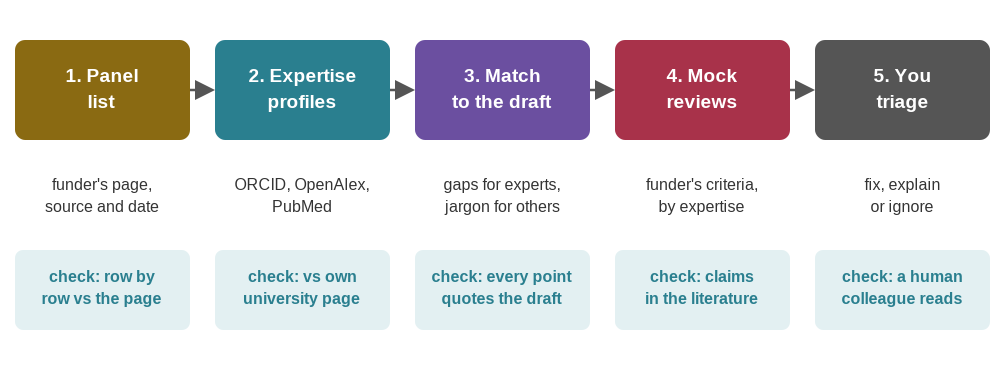
The workflow has five steps, and each has a check
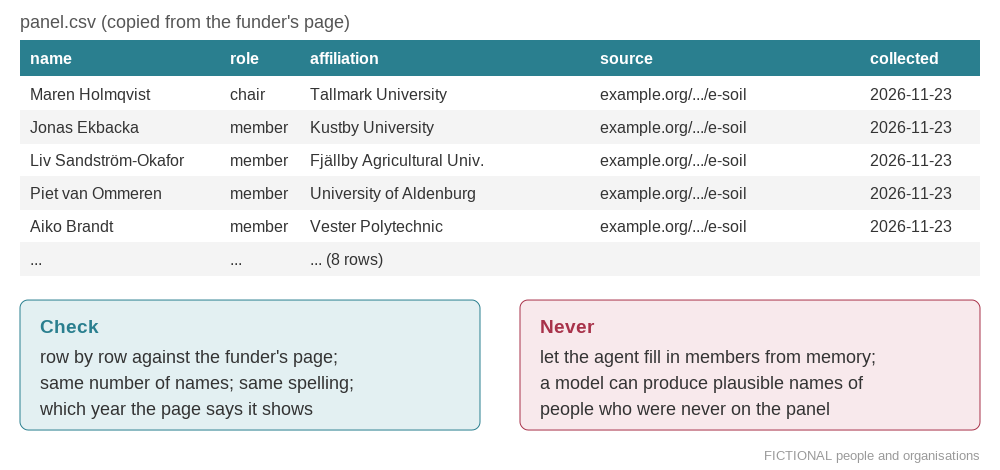
Funders publish panels in different places and at different times
Funder
What is published
Where (check the current page)
Swedish Research Council (VR)
Members of each review panel (beredningsgrupp), by subject area. Updated continuously; if a list shows last year, this year’s members are not yet recruited
vr.se → Applying for funding → How applications are assessed → Review panels
ERC
Panel members per scheme, panel and year, after the evaluation; per-call lists; current and past panel chairs
E-utilities API; 3 requests per second without a key, 10 with one
The person’s own university page
current title, research description
read it yourself; it is the reference for the check
Keys go in .env, exactly as in Collecting and analysing grant results.
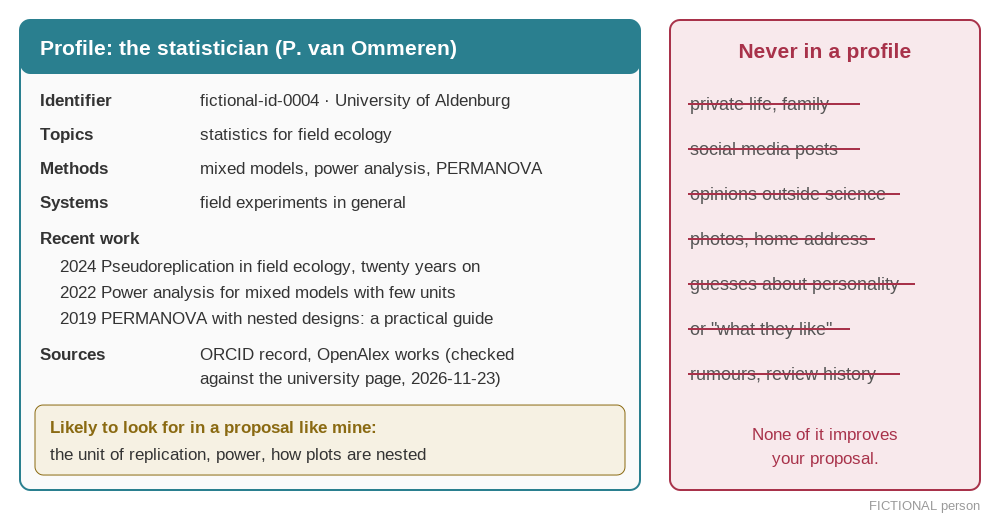
A profile describes expertise, and nothing else
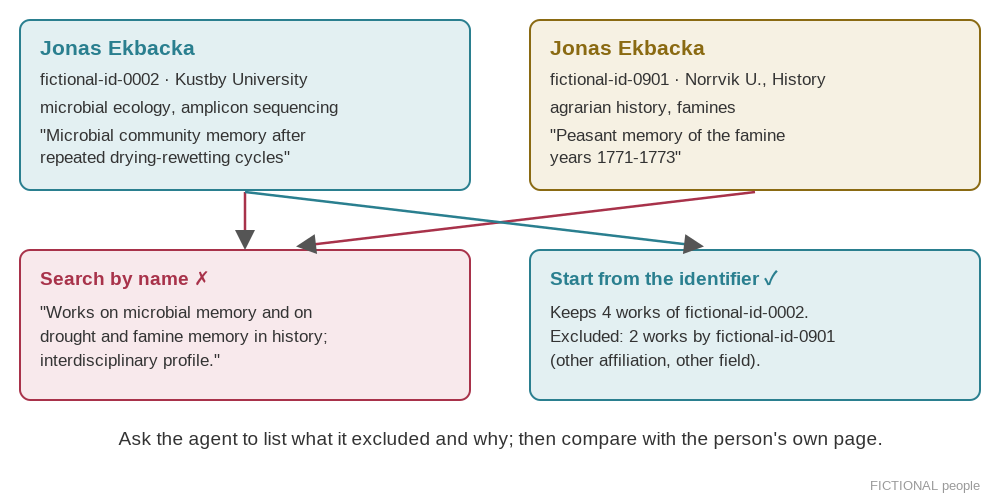
Two people can share a name; the identifier tells them apart
Step 3: match the profiles against your draft
The matching prompt asks for gaps and jargon separately
Here is my draft (proposal-draft.md) and expertise profiles of the panel
(profiles/). For each profile, write a short note:
1. Which sections of my draft will this person read as an expert?
2. What would this expert find thin, missing or overclaimed? Quote the
   sentence from my draft each time.
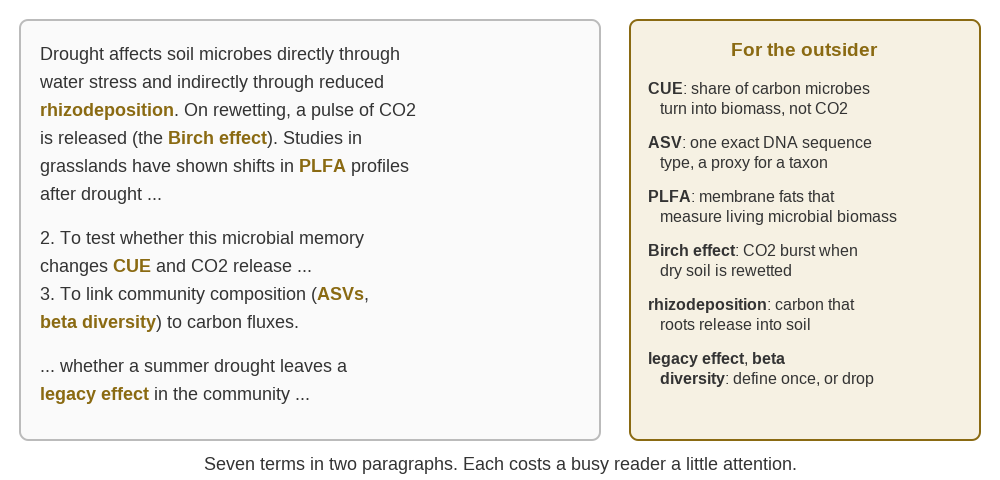
3. Which terms in my draft would this person NOT know if they are not an
   expert in it? List them with the section where they first appear.
Then make a table: draft sections x reviewers, with "expert" or "outsider".
Do not invent anything about the reviewers beyond their profiles.
Refer to them by expertise ("the statistician"), not by name.
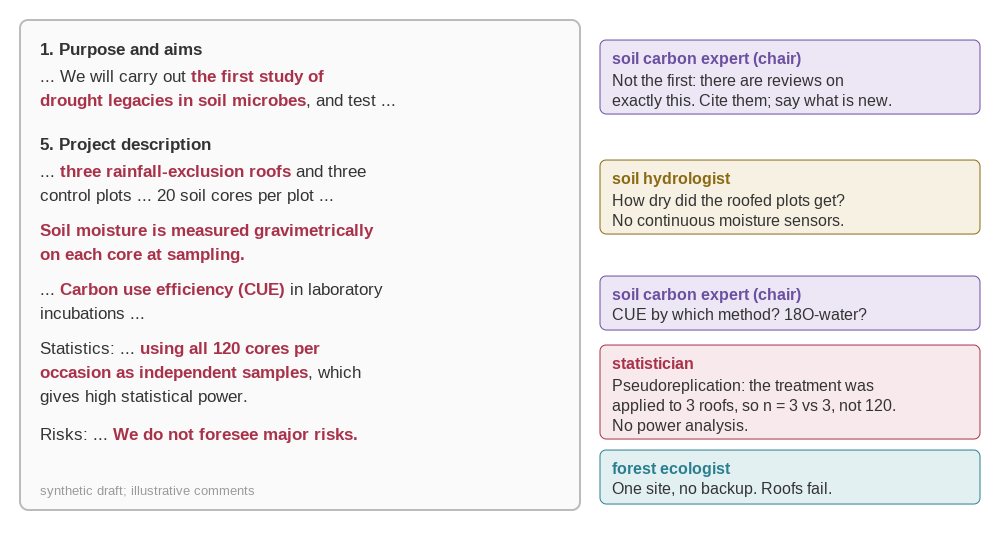
An expert sees what is missing
A non-expert stumbles on the jargon
Step 4: mock reviews follow the funder’s own criteria
Write mock reviews from an expertise, never in a named person’s voice
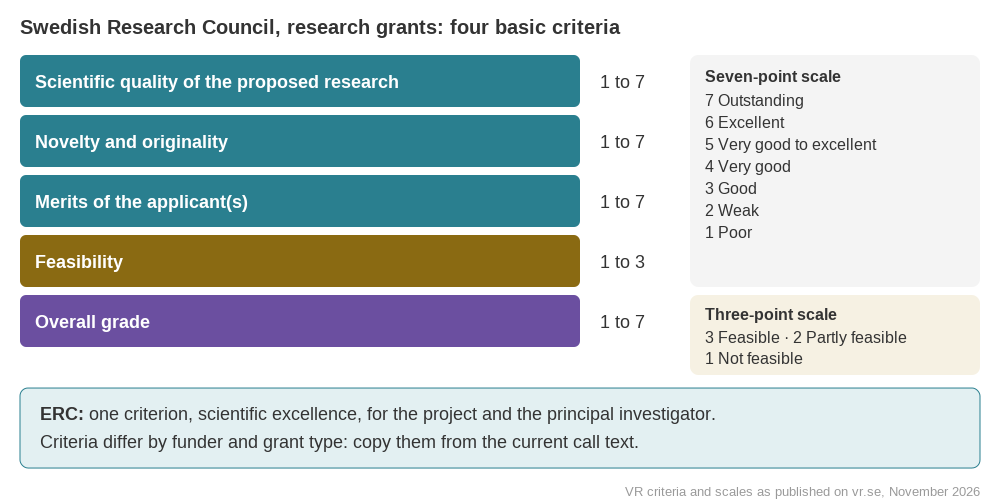
Write three mock reviews of my draft, using the criteria and grading scales
in criteria.md (copied from the call text). One review each from:
- a reviewer whose expertise is soil biogeochemistry and carbon cycling
- a reviewer whose expertise is statistics and experimental design
- a reviewer from a neighbouring field (animal ecology) who is not an expert
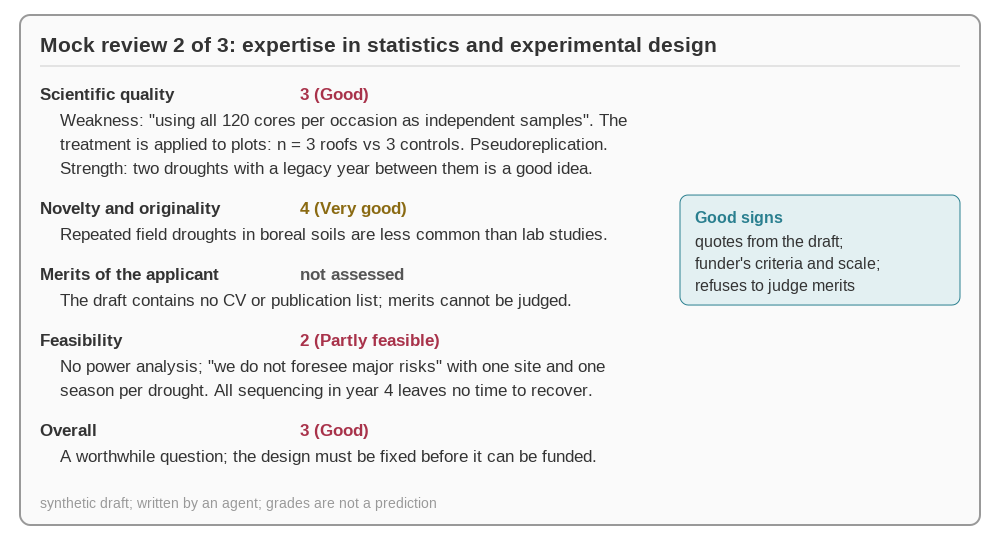
For each criterion: a grade, the main strengths and weaknesses, and a quote
from my draft for every weakness. Be as critical as a strict panel member.
Do not comment on the applicant's merits: there is no CV in the draft; say so.
A mock review looks like the real thing; read it as a draft
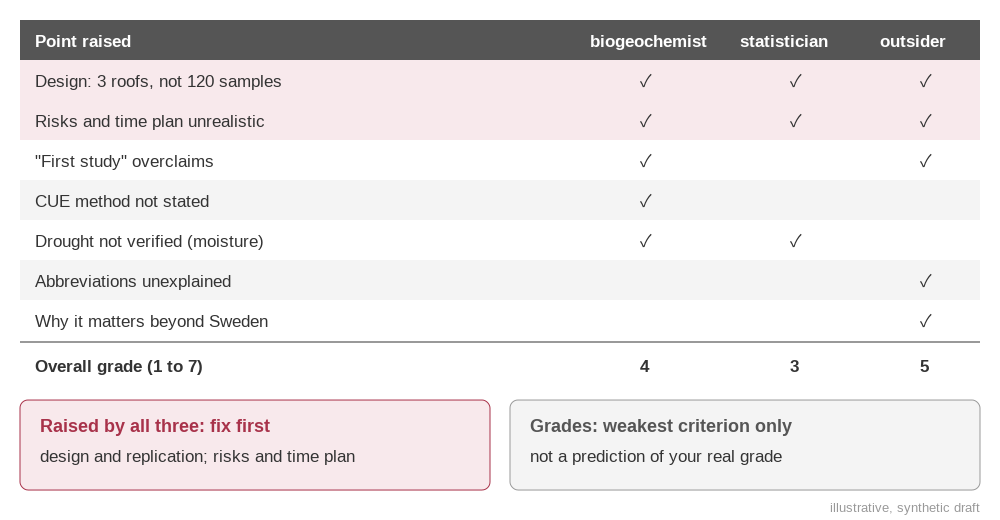
Three reviewers disagree, and the disagreement is useful
An agent as reviewer is too kind, too generic, or too sure
Too kind. Models tend to agree and praise. Ask for strictness, for the three weakest points, and for what would make a panel reject it.
Too generic. “The methods could be described in more detail” fits every proposal. Demand a quote from the draft for every weakness.
Too sure. It may claim a method is outdated or that a study already exists. Check every such claim in the literature yourself.
Inventing. Praise for a track record it has never seen; references to papers that do not exist. Strike them.
Not a prediction. It does not know the competition, the panel’s taste or this year’s budget.
Step 5: every point gets a decision: fix, explain or ignore
Your own draft is your decision; someone else’s never is
Your own draft may go to the agent if you accept the provider’s terms (Privacy, ethics and safety). Leave out unpublished results you would not share and anything confidential.
Co-applicants’ text and data: ask them first.
A proposal you review for a funder: never. VR does not allow generative AI in the scientific assessment; the ERC and NIH have similar rules. The same holds for mock reviews of someone else’s application.
Check the call text for rules on AI use by applicants. VR, for example, does not forbid it but holds you responsible for the content.
Keep the reviewer folder private, and delete it after the decision
Where this goes wrong
Wrong people. Last year’s panel, a namesake, a member who left. Check against the funder’s page and the identifier.
Too much about people. Profiles that drift into private life or opinions. Keep the fixed format; delete what does not belong.
Writing for one reader. Tailoring the proposal to one presumed reviewer, or citing their work for flattery.
Trusting the mock reviews. Invented literature, invented merits, kind grades. Every claim checked, every point triaged.
Contact. Any contact with a panel member about your application. Never.
Leaks. Profiles or your draft in a public repository or on your page.
Summary
Concept
Key fact
Why
Experts find gaps; non-experts stumble on jargon; both grade you
Ethics
Public professional data are still personal data: minimise, keep private, delete after the decision
Never
Contact or lobby reviewers; profile private life; mock reviews in a named person’s voice
Panel lists
VR review panels (updated continuously); ERC panel members per year and scheme; panels change
Profiles
ORCID, OpenAlex, PubMed; start from the identifier; check against the person’s own page
Mock reviews
Funder’s own criteria and scales; reviewers by expertise; quotes for every weakness
Verification
You triage every point: fix, explain, ignore, with a reason
Next (Parallel workers: Claude and Codex, Part 5): two agents at once, the same task to both, and one reviewing the other.